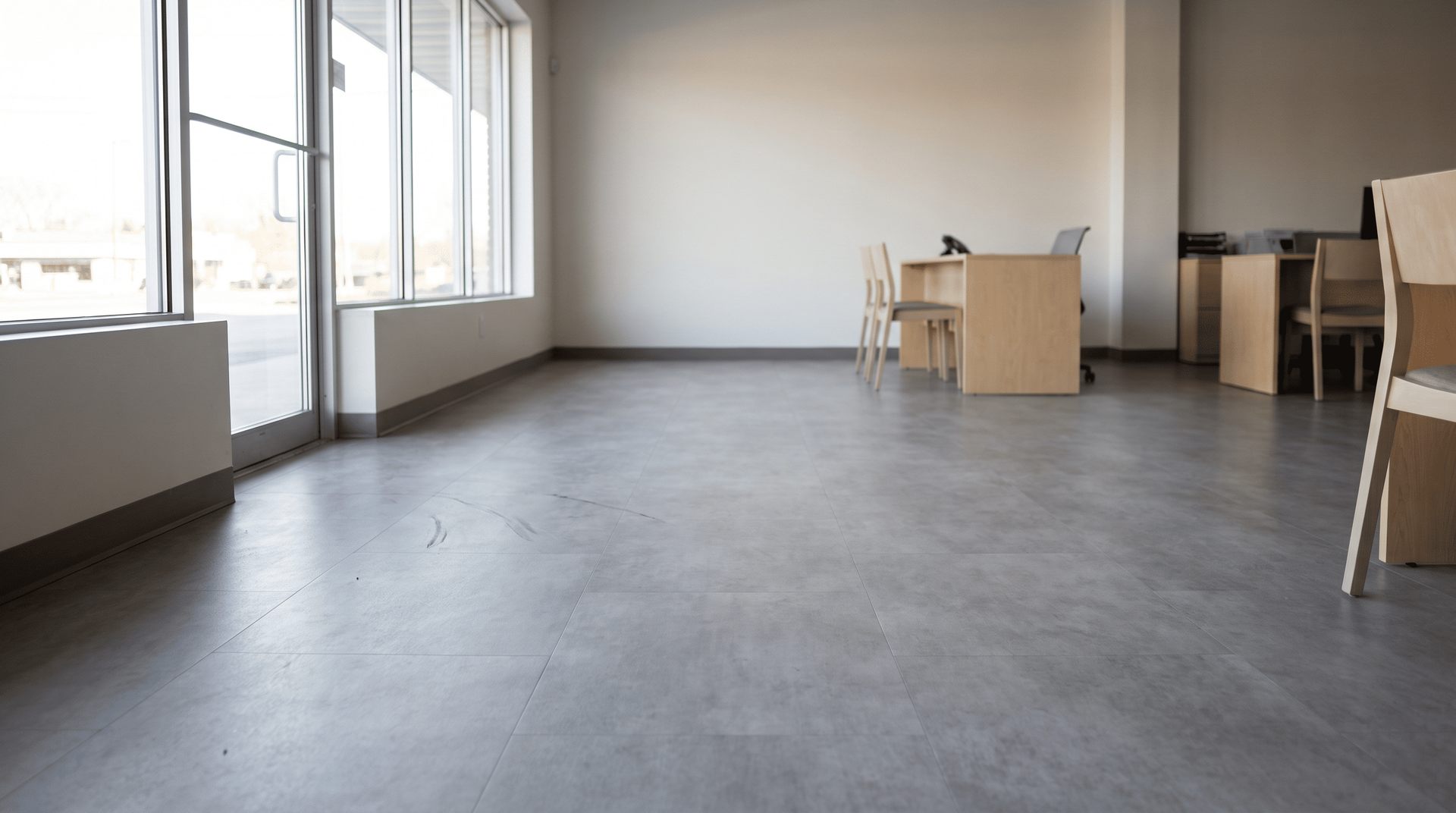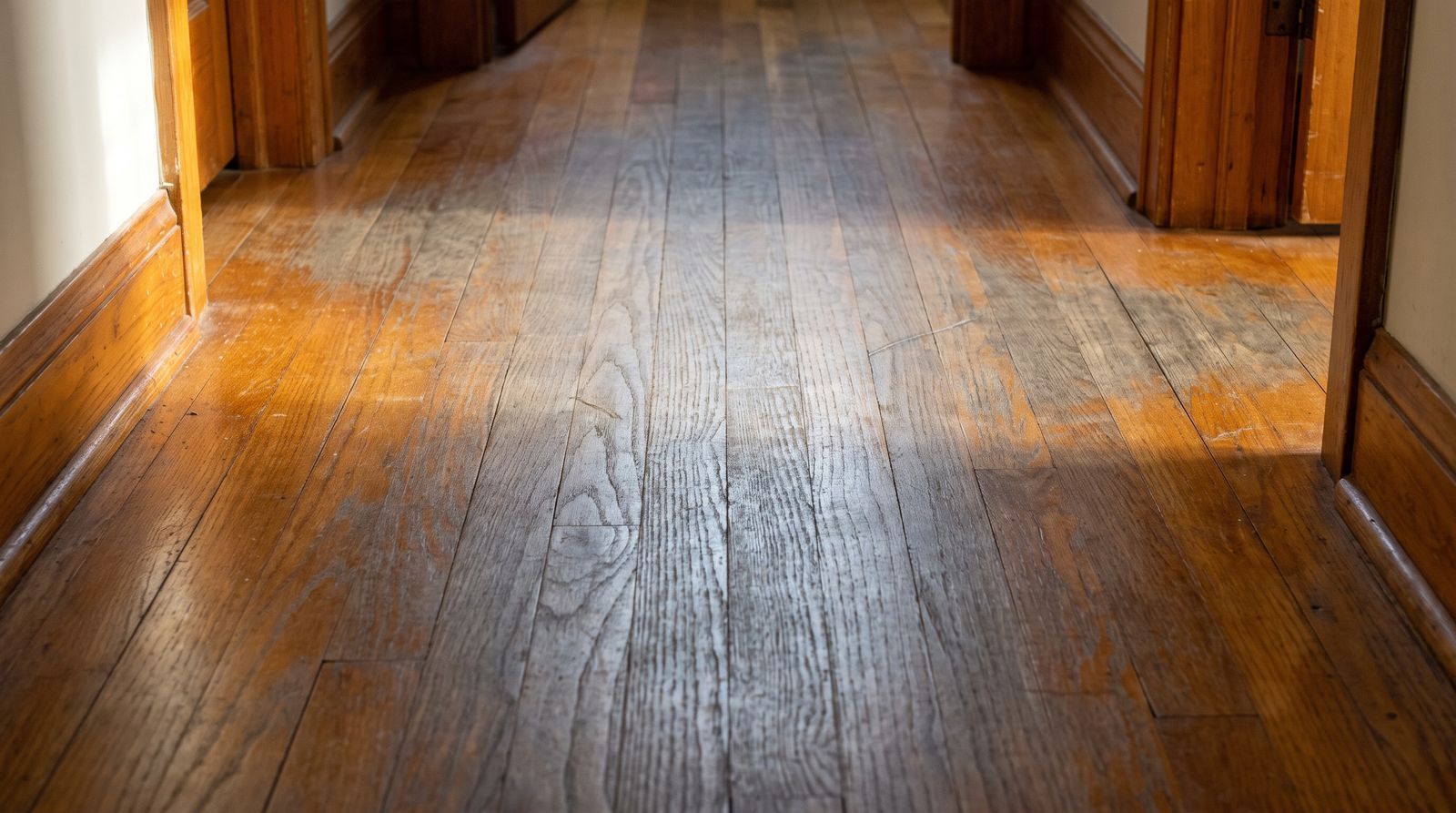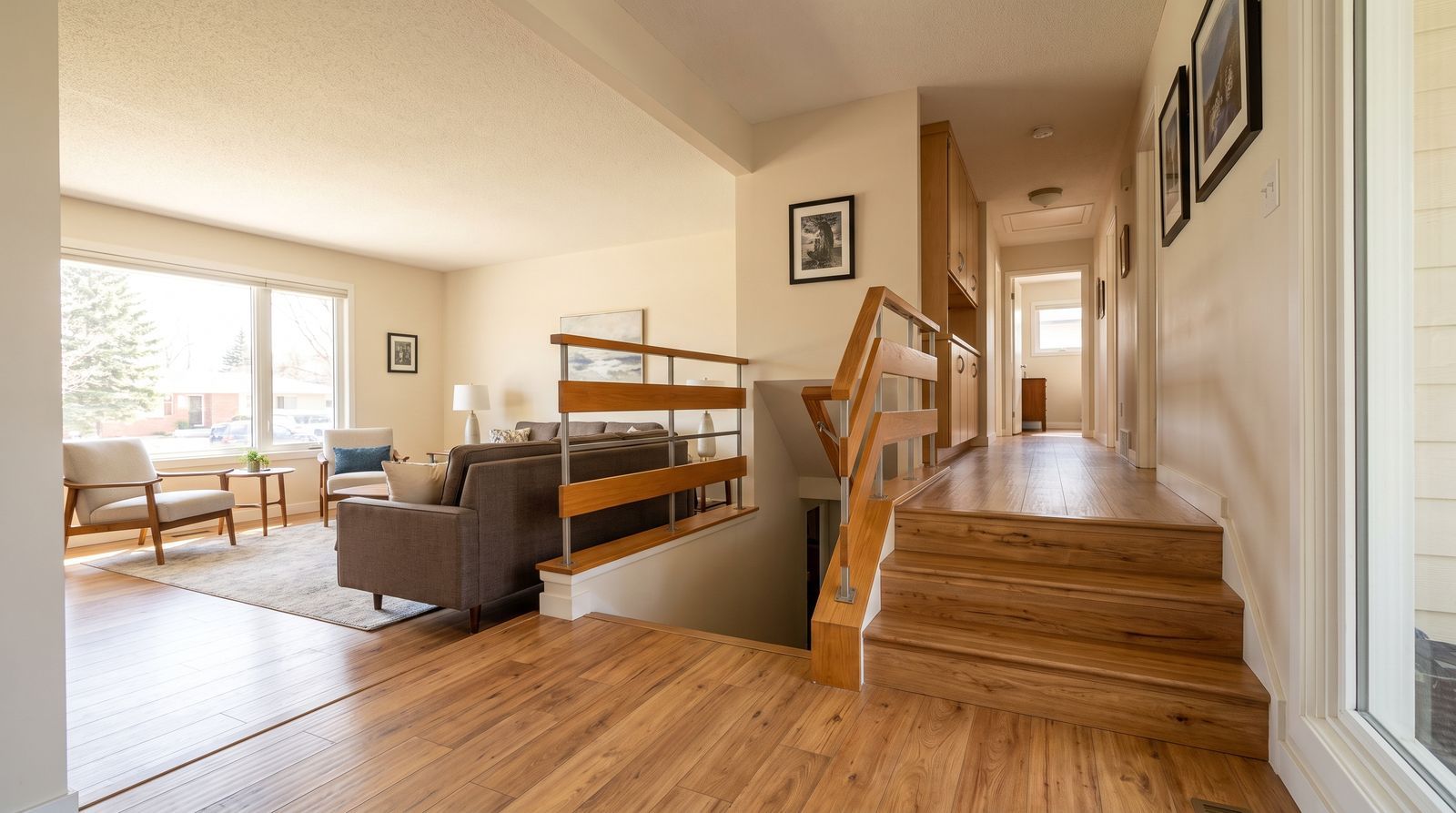


Engineered hardwood is real wood, a genuine hardwood veneer bonded to a stable plywood core, not a printed picture of wood like laminate, and not vinyl like LVP. The layered construction underneath is what makes it different from solid hardwood: more stable through temperature and humidity swings, and able to go in places, like over concrete or in a basement, where solid hardwood usually can't.
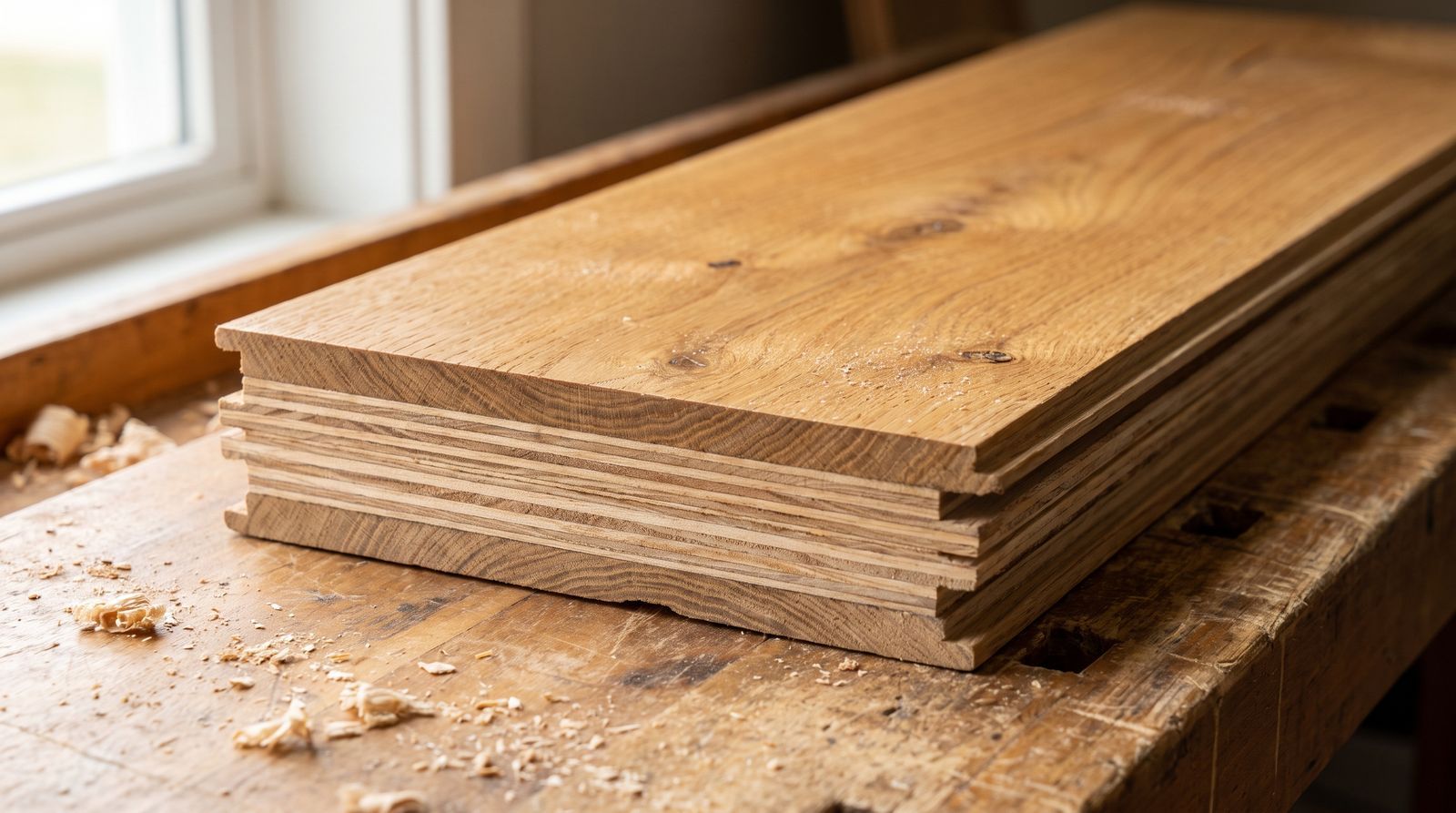
We hear this question a lot, usually from someone who's been told engineered hardwood is "fake" or "not real wood," and just wants a straight answer before they rule it out. It's real wood. Here's what's actually going on with how it's built, and why that construction exists in the first place.
First, the MisconceptionIt's Real Wood, Not a Wood Look
The top layer of every engineered hardwood plank is a genuine hardwood veneer, oak, maple, hickory, whatever species you choose, the same wood you'd get with solid hardwood. That's different from laminate, which uses a printed photographic image of wood grain under a plastic wear layer, and different from LVP, which is vinyl through and through. If you sand and refinish an engineered floor, you're sanding real wood, not a picture of it.
What's Actually UnderneathThe Part That Makes It "Engineered"
Below that wood veneer is a plywood core, usually five to seven thin layers of wood, cross-stacked and glued together so each layer's grain runs a different direction than the one next to it. That crosshatching is the whole point: it's what gives engineered hardwood its stability, and it's why the floor is called "engineered" in the first place, the construction is doing something specific, not just cutting corners.
Why the Layers MatterStability Opens Up Rooms Solid Hardwood Can't Handle
Solid hardwood is a single piece of wood all the way through, which means it expands and contracts more with humidity and temperature changes. That's why solid hardwood is generally not recommended in basements or directly over concrete, the movement and moisture exposure are too much for it. Engineered hardwood's cross-layered core resists that movement, which is exactly why it can go in those same spaces, over concrete slabs, with radiant heat systems, below grade, where solid hardwood would eventually cup, gap, or buckle.
The TradeoffYes, It Can Be Refinished, With a Limit
Because the top layer is a veneer rather than a solid board all the way through, engineered hardwood can typically be sanded and refinished 1 to 3 times, depending on how thick that veneer is. That's fewer times than solid hardwood, which can usually handle 4 to 6 refinishes. It's a real tradeoff for the stability you're getting, and it's worth knowing upfront rather than assuming it behaves identically to solid wood down the road.
A Few Things People Actually Ask Us
Is engineered hardwood considered "real" hardwood for resale purposes?
Yes. It reads as real wood to most buyers because it is, the surface is genuine hardwood veneer. It's a different product from solid hardwood, but not a lesser or fake one.
How is engineered hardwood different from laminate flooring?
Laminate has no real wood in it at all, the top layer is a printed image of wood grain under a clear protective coating. Engineered hardwood's top layer is genuine hardwood veneer.
Can engineered hardwood go in a basement?
In most cases, yes, which is exactly the kind of space its layered, more stable construction was designed for. Solid hardwood is typically not recommended below grade for this reason.
Does a thicker veneer always mean a better floor?
It generally means more refinishing potential over the floor's life, since there's more real wood to sand down before hitting the core. It's one factor worth asking about, not the only one.
Curious whether engineered hardwood fits your space? Get a free estimate, we're happy to walk through what's actually underneath before you decide on anything.