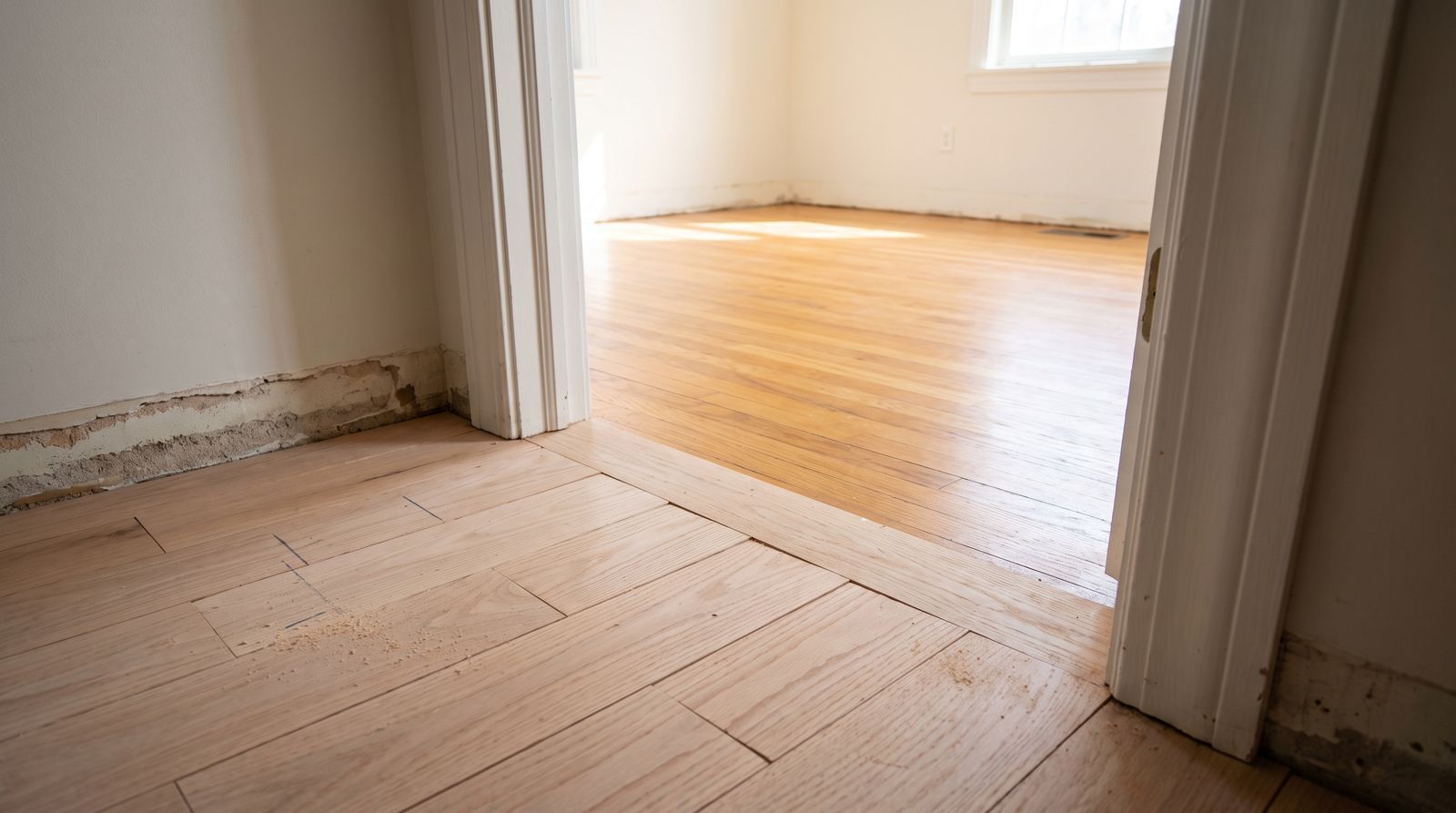


When they're applied well, oil-based and water-based finishes hold up about the same. The real differences are in how your floor looks, both on day one and ten years from now, how much the job disrupts your home, and how fast you get your rooms back. Oil-based gives a warm, amber tone that deepens over time. Water-based stays clear and close to the wood's natural color, with far less odor and a quicker return to normal.

This is one of the first questions we ask homeowners before a refinish, and most people haven't thought about it yet. That's completely normal. The finish is the clear protective layer that goes on top of the wood, and the choice between oil-based and water-based shapes more than people expect. Here's what each one actually means for your floor and your household.
DurabilityCloser Than Most People Think
There's an old idea that water-based finishes are the weaker option. That reputation comes from earlier generations of the product. Today, when a quality finish of either type is applied properly, the difference in how well it stands up to daily life is hard to notice. Kids, dogs, and dining chairs will wear on either one over time, and both can be refreshed later with a light screen-and-recoat instead of a full sand-down.
How It LooksThe Biggest Real Difference
Oil-based adds a golden, amber cast the moment it goes down, and it keeps warming for years. On red oak, that gives the classic, rich, honey-toned look a lot of people picture when they think of hardwood.
Water-based dries clear and stays close to the wood's natural color with much less yellowing over time. That matters most if you've picked a light floor, like natural white oak or a soft gray-beige tone. Under oil, those cooler colors won't stay cool, they'll drift warmer as the years go by. Water-based can look a little lighter and less glowing on red oak than people expect, which is worth seeing in person before deciding.
Living Through the JobOdor and Staying Home
Oil-based finish has a strong smell that lingers for days, and a lot of families choose to stay somewhere else for a night or two while it goes on. Water-based is much lower in odor, so most people stay home and simply keep out of the rooms being worked on. If you have young kids, pets, or someone sensitive to smells, this tends to be the deciding factor.
What the Project Days Look LikeDrying Time Between Coats
Each coat of oil-based finish needs most of a day to dry before the next can go on, so every coat is its own day. Water-based coats dry in a few hours, so several can often go on in a single day. Water-based usually takes an extra coat to build up the same protection, but even so, the project tends to wrap up sooner.
Getting Back to NormalWhen You Get Your Rooms Back
With both finishes, you can usually walk on the floor in socks after about a day. After that, they split:
- Water-based: furniture back in about two to three days, rugs after about two weeks, full cure in roughly one to two weeks.
- Oil-based: furniture back in about three to four days, rugs after three to four weeks, full cure in around 30 days.
"Cured" means the finish has reached its full hardness. Until then, it's more likely to scratch or dent, and rugs can leave marks by trapping the finish before it's done hardening.
Making the CallWhich One Fits Your Home
Oil-based is usually the better fit if you love that warm, traditional glow, especially on red oak, and you can plan around a longer project and a few nights away. Water-based is usually the better fit if you want a light or natural-colored floor to stay that way, would rather stay home during the job, or need the room back quickly. Neither is the wrong answer. It really comes down to the look you want and how your household lives.
A Few Things People Actually Ask Us
Is water-based finish as durable as oil-based?
With today's quality products applied correctly, yes, the durability difference is hard to notice in everyday use. The "water-based is weaker" reputation comes from older products.
Will an oil-based finish turn my floor yellow?
It will get warmer and more amber over the years. On red oak, most people like that. On a light or gray-toned floor, it can shift the color more than you'd want, which is why water-based is usually recommended there.
Can I stay home while my floors are being finished?
With water-based, most families do. With oil-based, the smell is strong enough that many people stay elsewhere for a night or two.
If my floor has oil-based finish now, can I switch to water-based later?
Yes. A water-based coat can go over an existing oil-based finish, so you're not locked into whatever was used before.
Not sure which finish fits your floor? Reach out and we'll talk through which one fits your floor and the way your household lives.