

Often, yes. A lot of water-damaged hardwood can be saved if the water is stopped and the floor starts drying within the first day or two. Mild cupping frequently settles back down as the wood dries, and surface damage can usually be sanded out once everything has dried completely. Boards that are buckled, deeply stained black, soft, or moldy usually need to be replaced, and so does engineered hardwood whose layers have started separating.
- Speed matters most. Stop the water and start drying right away. Mold can begin growing within 24 to 48 hours.
- Don't sand a cupped floor while it's still wet. Wait until moisture readings say the wood and subfloor are dry.
- Solid hardwood has more room to recover than engineered hardwood, which usually can't be fixed once its layers separate.

A leaking dishwasher, a pipe that froze and split, an ice maker line that let go overnight. Water on a hardwood floor is stressful, and the first instinct is usually to assume the whole floor is ruined. Sometimes it is, but a lot of the time it isn't. What you do in the first couple of days, and how patient you are after that, makes a big difference.
First Things FirstWhat Should You Do Right After a Leak?
- Stop the water. Shut off the supply to the appliance or the main if you need to.
- Get standing water up fast. Towels, a wet vac, whatever you have.
- Pull up rugs and move furniture off the wet area so the floor can breathe.
- Start drying. Dehumidifiers and fans help, as long as the water was clean. If it came from a sewer backup or outside floodwater, don't blow air around. That's a job for a water damage professional.
The reason to move quickly is mold. EPA guidance is to dry water-damaged materials within 24 to 48 hours, because that's roughly when mold can start to grow, including on the subfloor underneath where you can't see it.
Reading the DamageWhat Do Cupping, Crowning, and Buckling Mean?
Wood swells when it takes on water, and the shape it takes tells you a lot:
- Cupping: the edges of each board rise higher than the center, so the floor looks rippled. It usually means moisture is coming from underneath. Mild cupping often flattens out over a few weeks as the floor dries.
- Crowning: the opposite, with the center of each board higher than the edges. It often shows up when a cupped floor gets sanded before it was fully dry.
- Buckling: boards lift right off the subfloor. That's the most serious of the three, and those boards usually have to be replaced.
Why Should You Wait Before Sanding?
This is where patience pays off. When a floor is cupped, it's tempting to sand it flat right away. But if the wood is still wet, it will keep drying after it's been sanded, and the boards can end up crowned instead. The right time to sand and refinish is when a moisture meter shows the wood and the subfloor have both dried out and the readings have stopped changing, with the wood within a few points of the subfloor. That can take a few weeks, and sometimes longer. The surface can look dry well before the wood underneath actually is.
Save or ReplaceWhen Can Water-Damaged Hardwood Be Saved?
Once the floor has fully dried, here's how it usually breaks down:
- Usually fixable with a sand and refinish: mild cupping that has settled down, light surface staining, and finish damage.
- Usually needs board replacement: buckled boards, dark or black stains that go deep into the wood, soft spots, or any mold on the boards or subfloor.
- Usually needs full removal: floors that stayed wet for days, or that were soaked by sewage or floodwater.
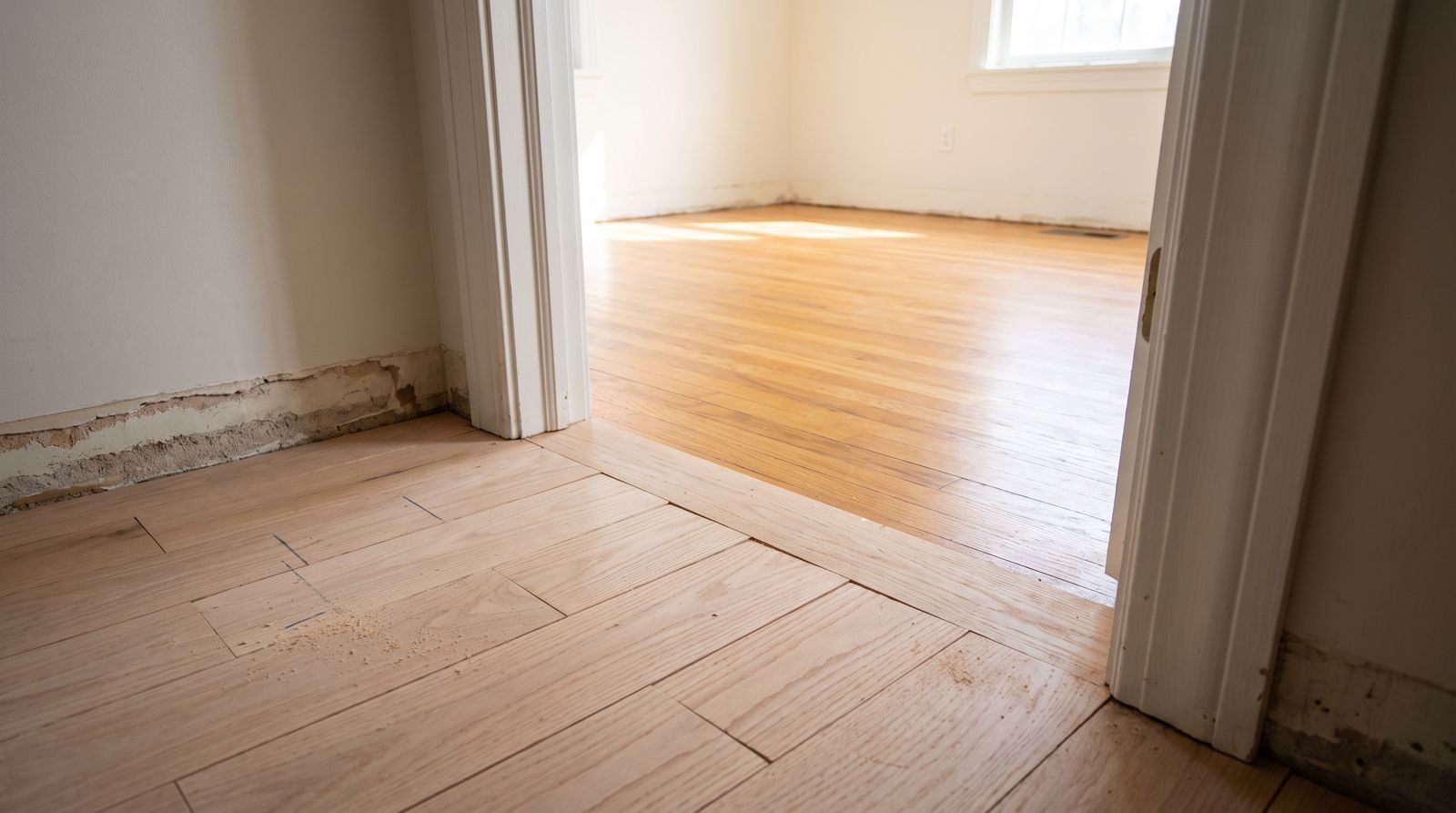
Replacing just the damaged boards is often possible, and refinishing the surrounding area afterward helps the repair blend in. We cover that in can new hardwood match your existing floors.
Engineered FloorsIs Engineered Hardwood Different?
Yes. Engineered hardwood is a real wood top layer bonded to a layered core. When water gets between those layers, they can separate, which is called delamination, and that can't be reversed. Signs include curling edges, gaps opening between boards, and a hollow sound when you walk on it. Solid hardwood has more room to recover, because it can be dried and sanded again. Delaminated engineered boards usually need to be replaced.
A Few Things People Actually Ask Us
Will cupped hardwood floors go back to normal?
Mild cupping often does once the water source is fixed and the floor dries out, usually over a few weeks. If it's still cupped after the wood and subfloor test dry, sanding and refinishing can flatten it.
How long does it take a wet hardwood floor to dry?
It depends on how much water got in and how long it sat, but plan on weeks rather than days. A moisture meter is the only reliable way to know, since the surface can look dry long before the wood underneath is.
Can black water stains be sanded out of hardwood?
Usually not completely. Dark or black stains tend to run deep into the wood, so those boards are typically replaced rather than sanded.
Can I just replace the damaged boards?
Often, yes. Damaged boards can be removed and replaced individually, then the area is refinished so the new boards blend in with the rest of the floor.
Should I put fans on a wet hardwood floor?
For clean water, yes. Fans and dehumidifiers help it dry faster. If the water was from a sewer backup or floodwater, hold off and call a water damage professional, since fans can spread contamination.
If you're dealing with water on a hardwood floor and aren't sure what you're looking at, feel free to reach out with any questions.