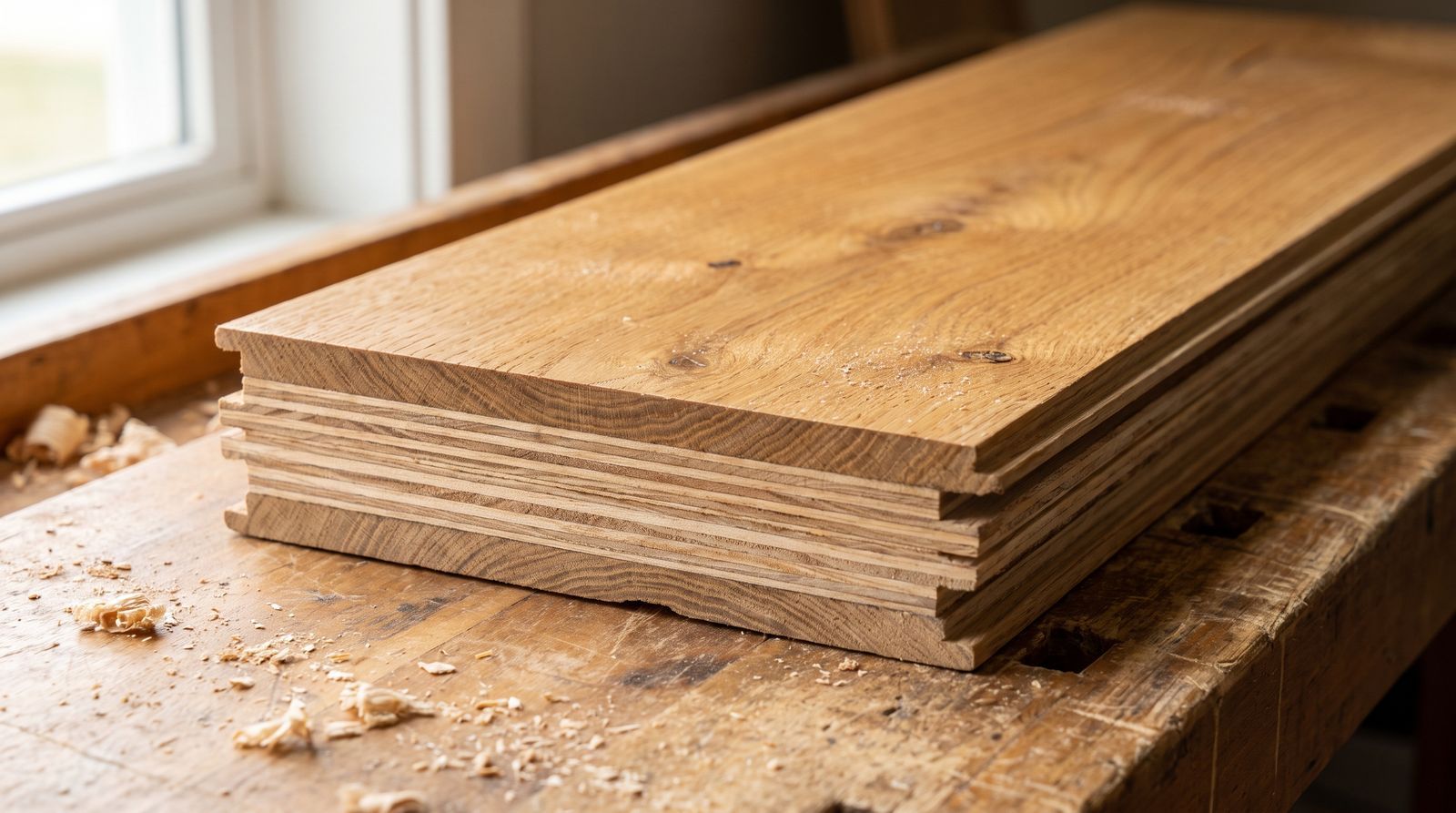


Yes, new hardwood can usually be made to match your existing floors, but almost never straight out of the box. The secret is matching the species, width, and thickness of the old boards, then sanding and refinishing the old and new wood together so they take the same stain and finish at the same time. Without that last step, new boards tend to stand out, even when they're the exact same wood.
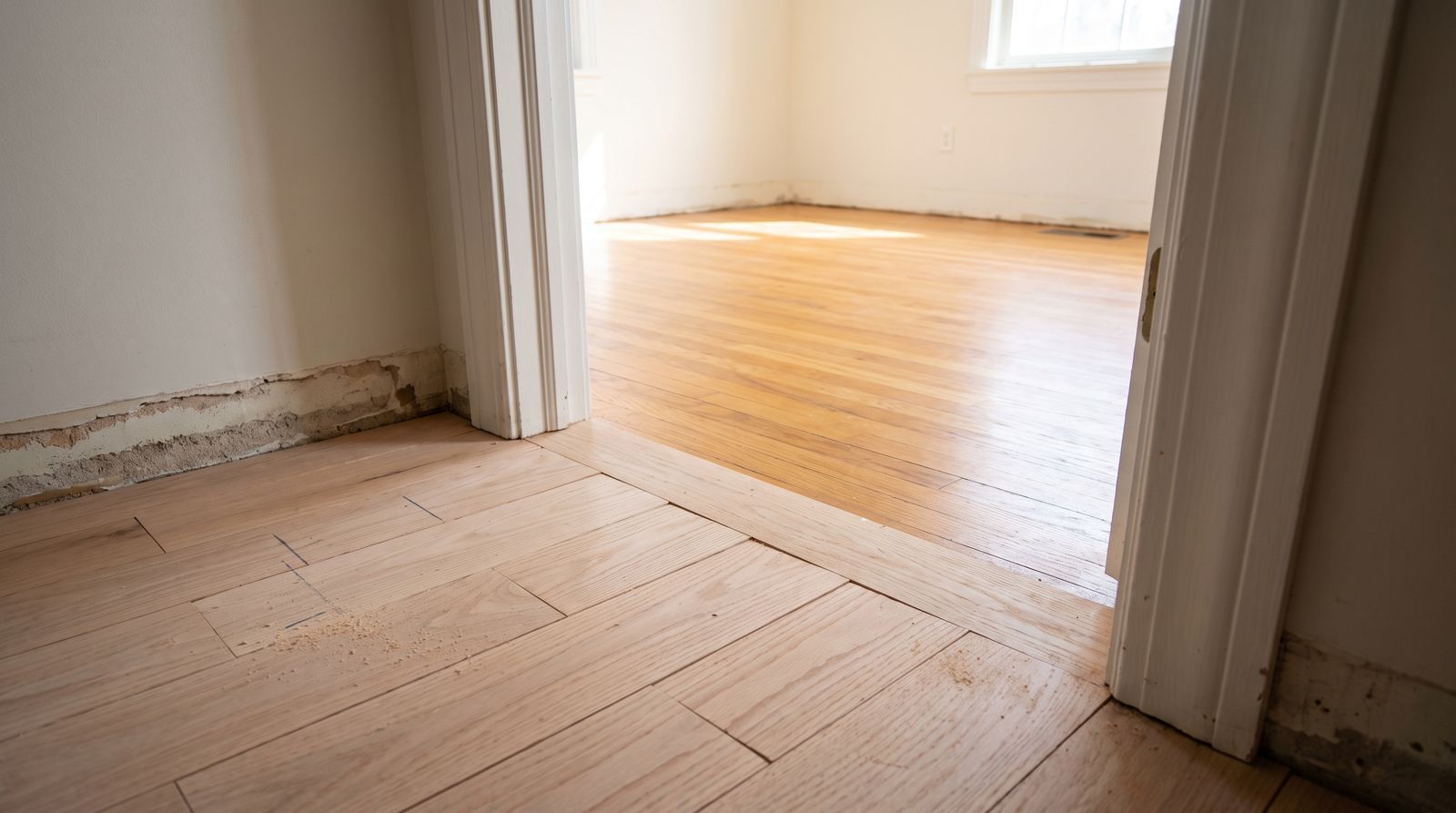
This comes up all the time. Someone is opening up a wall, adding hardwood to a room that used to be carpeted, or dealing with a few boards ruined by a leak, and the first question is always the same: "Will it match?" The honest answer is that it can, and here's what actually makes the difference.
Why It Doesn't Match at FirstOld Wood and New Wood Aren't the Same Color
Hardwood changes color as it ages. Years of sunlight and the finish on top slowly shift its tone, usually deeper and warmer. So even if your new boards are the same species as the old ones, the new wood will look paler and brighter next to wood that's been in your home for twenty years. Floors that have faded in strong sun are usually the hardest to match. That's not a flaw in the new wood, it's just time.
Step OneMatch What You Can Measure
Before anything is ordered, the existing floor needs to be identified and measured:
- Species: red oak and white oak are the two most common in older homes, and they look different even under the same stain. Getting this right matters more than anything else.
- Width: a lot of older homes have narrow strips, around 2¼ inches, while newer floors tend to be wider. Mixing widths is one of the quickest ways to make a patch obvious.
- Thickness: new boards need to sit flush with the old ones. Even a small height difference shows up as a ridge you can see and feel.
- Solid or engineered: solid hardwood is much easier to match. Engineered floors can be tough unless you know the exact product and it's still being made.
Weave It In, Don't Butt It Up
Where new flooring meets old in the same direction, the best-looking result comes from weaving, sometimes called lacing. Instead of ending the old floor in a straight line and starting the new one beside it, boards are removed at staggered lengths so the new boards interlock with the old ones. That avoids the hard seam that gives away an addition. It takes more work, but it's what makes the floor read as one continuous surface.
For small repairs, there's a trick that's been around a long time: take boards from inside a closet, where they've aged with the rest of the house but stayed out of the sun, and use them in the visible spot. The new boards then go in the closet, where nobody will notice.
Sometimes a transition at a doorway makes more sense, especially between rooms that aren't open to each other. A threshold gives a natural break, so the two floors don't have to be identical.
Step ThreeRefinish Old and New Together
This is the step that actually makes it match. Once the new boards are in, both the old and new floors are sanded down to fresh wood and finished at the same time, with the same stain and the same finish. Sanding removes the aged surface from the old boards, so both start from the same place. It's the most reliable way to get a true match, and it means the whole floor, old and new, comes out looking freshly done.
If refinishing the existing floor isn't on the table, the honest expectation is that the new section will look different, at least for a while. In that case, a deliberate transition, or a coordinating color rather than an exact match, often looks better than a near-miss.
A Few Things People Actually Ask Us
Can new hardwood match my old floors without refinishing everything?
Sometimes it gets close, but it's rarely a true match. The aged color and finish on the old boards are hard to recreate on new wood. Refinishing both together is the dependable way to get them to match.
How do I know what kind of wood my floor is?
A flooring pro can usually tell by looking at the grain and color, and by checking a board's edge at a floor vent or threshold. That also shows the width and thickness you'll need to match.
Will the new boards eventually darken to match on their own?
They'll age over time, but the old boards keep aging too, so the gap doesn't fully close. Refinishing together is what evens them out.
Can you replace just a few damaged boards?
Yes. Damaged boards can be pulled and replaced individually, with the joints staggered so the repair doesn't form a block. Refinishing the surrounding area afterward helps the patch blend in.
Adding hardwood to a room or repairing a damaged section? Reach out and we'll take a look at your existing floor and talk through the best way to blend it.