

LVP and LVT are made from the same material and built the same way. The difference is shape and look. LVP, luxury vinyl plank, comes in long, narrow planks designed to look like hardwood. LVT, luxury vinyl tile, comes in squares or rectangles designed to look like stone or ceramic tile. In most cases, they perform about the same, so the choice really comes down to the look you want in each room.
- LVP looks like hardwood planks; LVT looks like stone or ceramic tile. Both are luxury vinyl.
- They share the same layered construction, so water resistance and durability depend on the specific product, not on plank vs. tile.
- The real differences are appearance, layout, and a few installation options, like grout, which only some LVT allows.
The letters get thrown around a lot, on product labels, in showrooms, in estimates, and it's easy to assume they're two different products with two different sets of pros and cons. They're closer than that. Here's what each one actually is, what's the same, and where the real differences show up.
The BasicsWhat Is Luxury Vinyl Flooring?
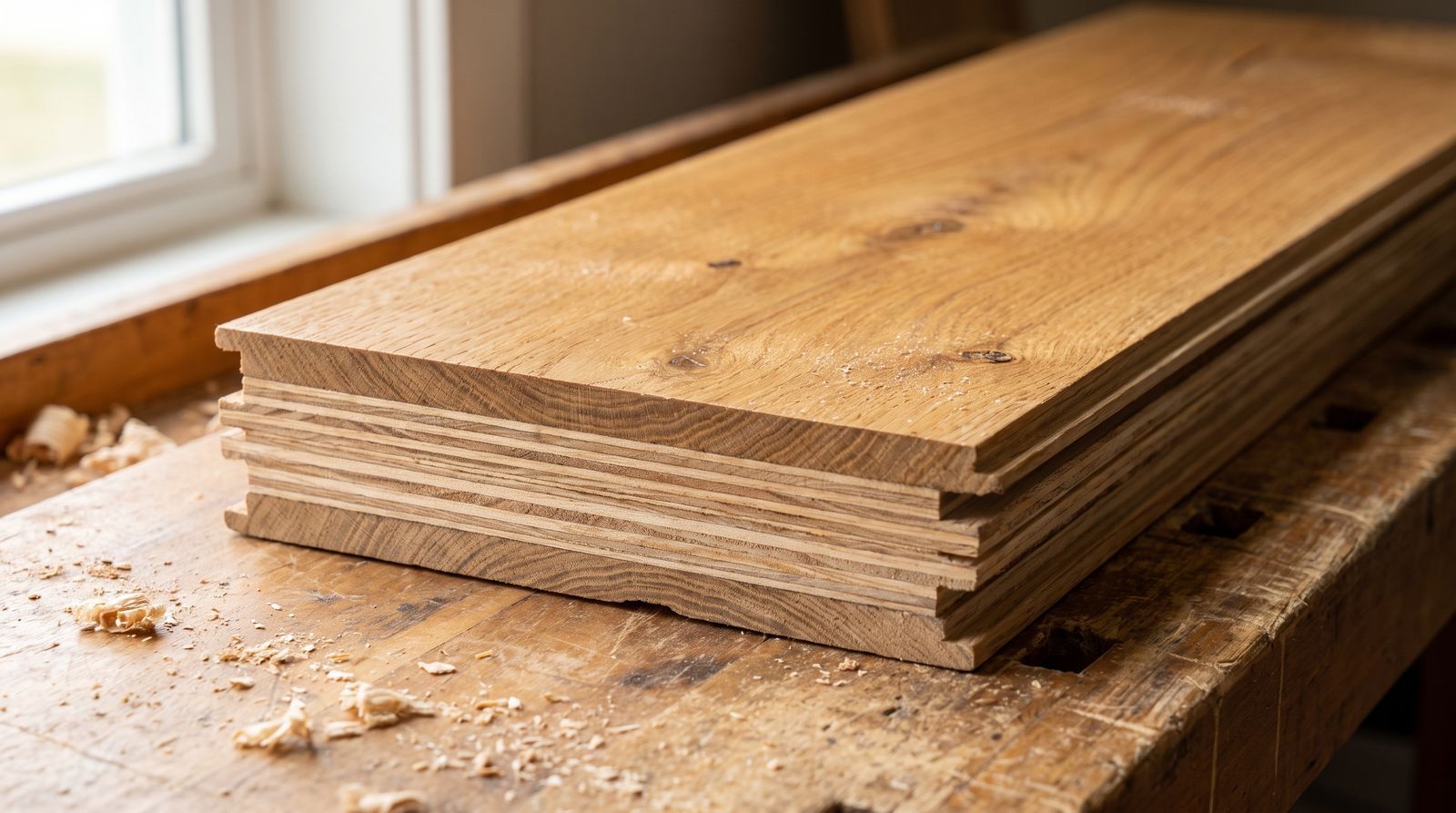
Luxury vinyl is a type of flooring built in layers. On top is a clear protective coat called the wear layer. Under that is a printed design layer that gives it the look of wood or stone, then a core that gives it strength and stability, and a backing on the bottom. The wear layer is the part that takes the everyday scuffs, and it's measured in mils, thousandths of an inch. A thicker wear layer generally means a floor that holds up better to heavy use.
LVP and LVT are both luxury vinyl, built with the same layers. Only the shape and printed look change.
The Plank VersionWhat Is LVP?
LVP is luxury vinyl that comes in long, narrow boards with a printed wood grain, and many products add a textured surface so the grain feels real underfoot. It's laid out just like a hardwood floor, with staggered board ends. It's a common pick for living rooms, bedrooms, and basements, anywhere someone wants the look of wood with more water resistance. (You can see the luxury vinyl options we install here.) If you'd rather have real wood with some of that same stability, engineered hardwood is the other option worth knowing about.
The Tile VersionWhat Is LVT?
LVT is luxury vinyl that comes in squares or rectangles printed to look like marble, slate, travertine, or ceramic tile. Some LVT products can even be installed with grout between the pieces, which makes the tile look more convincing. It tends to show up in bathrooms, kitchens, laundry rooms, and entryways, places where a tile look feels natural, without the cold, hard surface of real stone.
PerformanceIs LVP or LVT More Durable or Waterproof?
Neither, by default. Because they share the same construction, LVP and LVT behave alike in the ways that usually matter most:
- Water resistance: most luxury vinyl, plank or tile, is highly water resistant, and many product lines are fully waterproof. The specific product matters more than the shape.
- Durability: how well it holds up depends on the wear layer and overall product quality, not on whether it's a plank or a tile.
- Care: both clean up with sweeping and a damp mop. No waxing or refinishing.
You'll sometimes hear that one feels softer than the other underfoot. That really comes down to the thickness and core of the specific product, so it's worth comparing actual samples rather than going by the label.
The Real DifferencesWhat's Actually Different Between LVP and LVT?
The differences are practical ones. Planks give you a long, linear, wood-floor look, while tiles give you a grid, the look of a tiled room. Both come in versions that click together and versions that are glued down, and some LVT can be grouted, which planks can't. The installation method that's right for your floor depends on the product and the subfloor underneath, so that's something to sort out room by room.
Making the CallWhich Is Better, LVP or LVT?
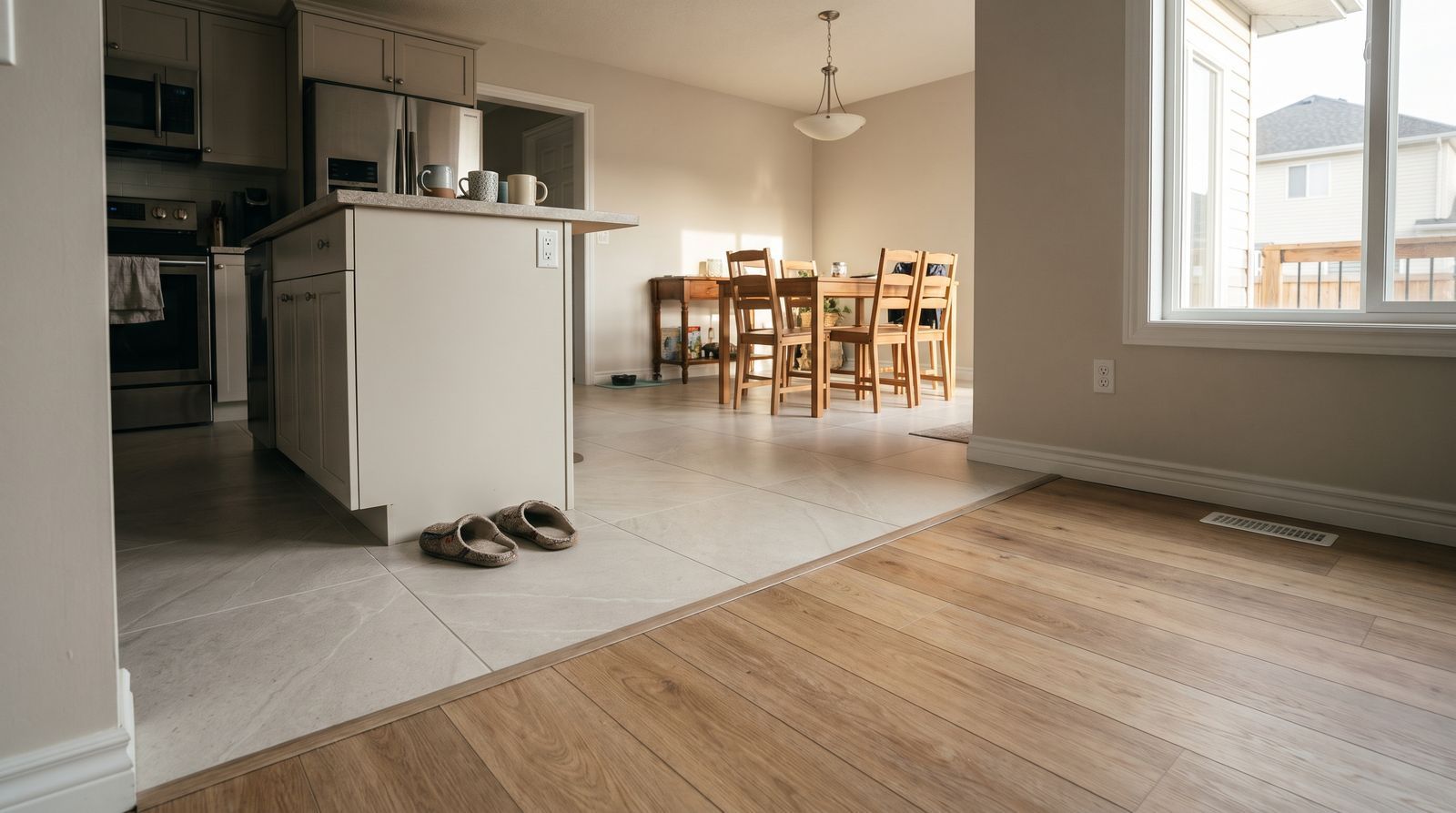
Neither is better overall. If you want the room to read as a wood floor, go with LVP. If you want it to read as tile or stone, go with LVT. A lot of homes use both, LVT in a bathroom or mudroom and LVP through the main living areas, and since they're the same material, they work well together.
A Few Things People Actually Ask Us
Is LVT waterproof?
Many LVT products are fully waterproof, and most are highly water resistant. The same is true for LVP, since they're made of the same material. Check the specific product, because that's what determines it, not the shape.
Can LVP or LVT go over my existing floor?
Often, yes, as long as the floor underneath is flat, clean, and solid. It usually shouldn't go over carpet, and any dips or soft spots need to be fixed first or they'll show through. That's why we check what's underneath before anything goes down. More on that in why subfloor prep matters.
Is LVP or LVT good for pets and high-traffic areas?
Both are popular with pet owners and busy households because they handle spills and accidents well. They're not scratch-proof, though. A thicker wear layer is the main thing to look for if the floor will take a lot of daily wear.
Is LVT the same thing as VCT?
No. VCT, vinyl composition tile, is a thinner, older style of tile you often see in schools and offices, and it needs regular waxing to hold up. LVT has a protective wear layer built in and doesn't need waxing. Our commercial flooring guide covers VCT in more detail.
Can LVT be installed with grout?
Some LVT products are designed to be grouted, which gives them a more authentic tile look. Not all are, so it depends on the product you choose.
Can I use LVP in one room and LVT in another?
Yes, and it's a common approach. Since they're the same type of material, they pair well, with a transition strip where the two meet.
If you're weighing plank against tile for a specific room, feel free to reach out with any questions.