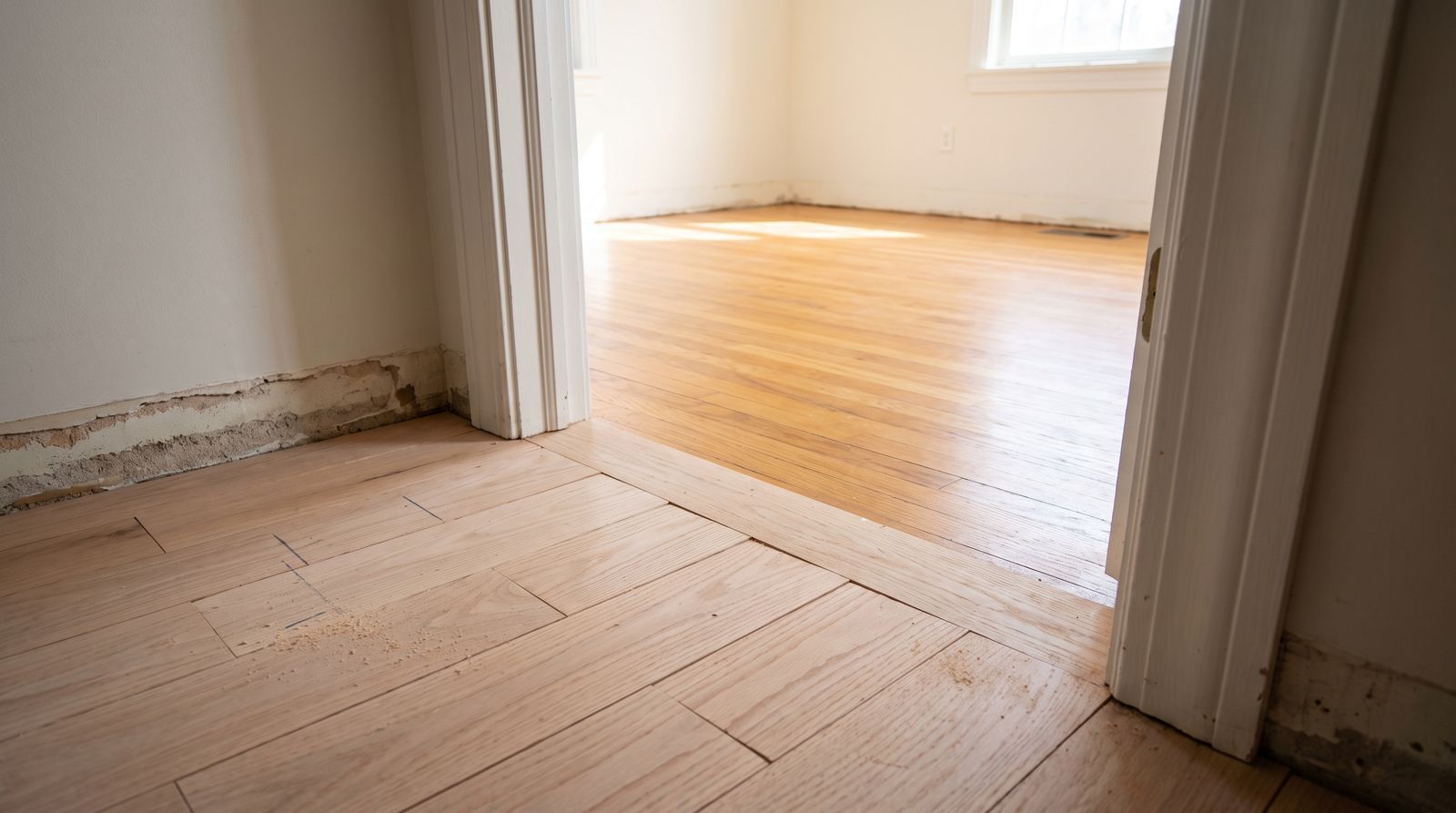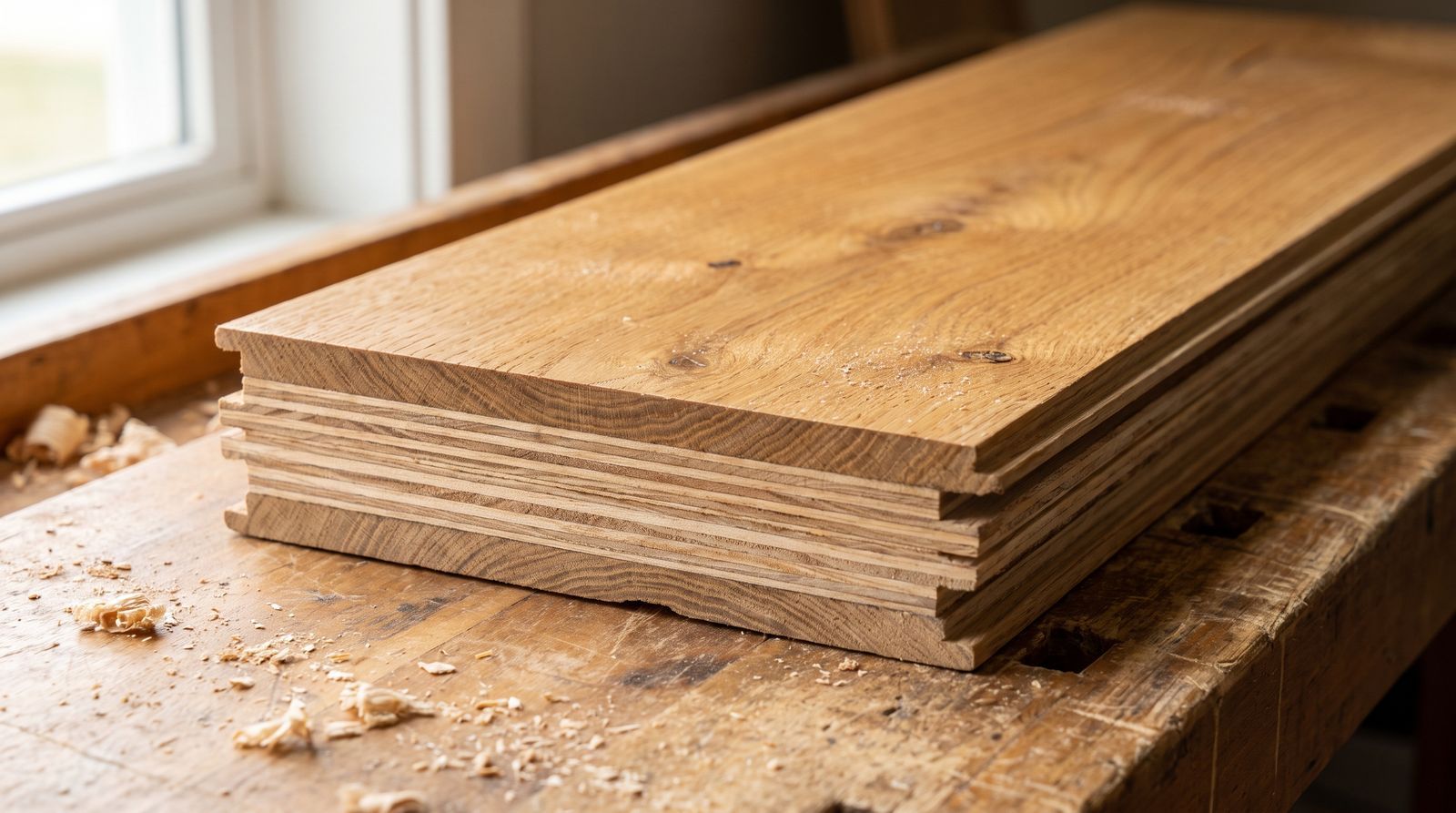


The subfloor is the part of the job nobody photographs, and it's the part that decides whether your new floor still looks right in five years. Skip it, or rush it, and even the best material money can buy will telegraph every dip, crack, and moisture problem hiding underneath.

Homeowners pick a plank color. They pick a finish. Almost nobody asks about the subfloor, because it's invisible the second the new flooring goes down. That's exactly why it's the step corners get cut on, and why it's the step that actually determines whether the finished floor holds up.
Step 01Checking It's Actually Flat
Most flooring materials, especially rigid ones like hardwood and LVP, need a subfloor that's flat to within about ⅛ inch over any 6-foot span. Anything more than that and the new floor "telegraphs," meaning every dip and hump in the subfloor shows up as a visible flaw in the finished surface. This isn't a nitpick, it's the difference between a floor that reads as smooth and one that visibly ripples under the right light.
Step 02Testing for Moisture, Not Guessing
This is the step that gets skipped most often, and it's the one that causes the most expensive problems later. A subfloor should read under 12% moisture before installation, and new wood flooring should be within 2 to 4 percentage points of that subfloor reading before it ever goes down. Install over a subfloor that's too wet and you're looking at cupping, buckling, or warping down the road, problems that show up months after the crew has already left.
We test this with a moisture meter, not a guess based on how the basement "feels." It's a five-minute step that prevents a five-figure mistake.
Step 03Structural Soundness, Not Just Surface Level
Flat and dry isn't the whole picture. A subfloor also needs to be structurally solid, no soft spots, no old water damage hiding under a rug, no squeaks that mean a loose panel. Any of those get addressed before the new flooring goes down, not discovered after, when fixing it means tearing up brand-new material.
A Few Things People Actually Ask Us
How do I know if my subfloor needs work before new flooring goes down?
You often can't tell just by looking. Soft spots, moisture, and minor unevenness are usually invisible until they're tested or the old flooring comes up. That's exactly why this gets checked as part of the job, not assumed to be fine.
Does every flooring material need the same level of subfloor prep?
No. Rigid materials like solid hardwood and thicker LVP are less forgiving of an uneven subfloor than something like carpet, which can mask minor imperfections. The more premium and rigid the material, the more the subfloor underneath actually matters.
What happens if a contractor skips moisture testing?
The floor can look perfect on install day and start cupping, gapping, or buckling months later once moisture works its way through. By then it's usually a full replacement, not a simple fix, which is exactly why this step matters more than it seems to at the time.
Can subfloor problems be fixed, or does that mean starting over?
Almost always fixable. Leveling compound handles minor unevenness, and moisture issues usually trace back to a source that can be addressed before installation. It's a normal part of the process, not a red flag about your house.
Not sure what's happening under your current floor? Ask us to take a look, a proper subfloor check is part of how we start every job, not an upsell tacked on later.