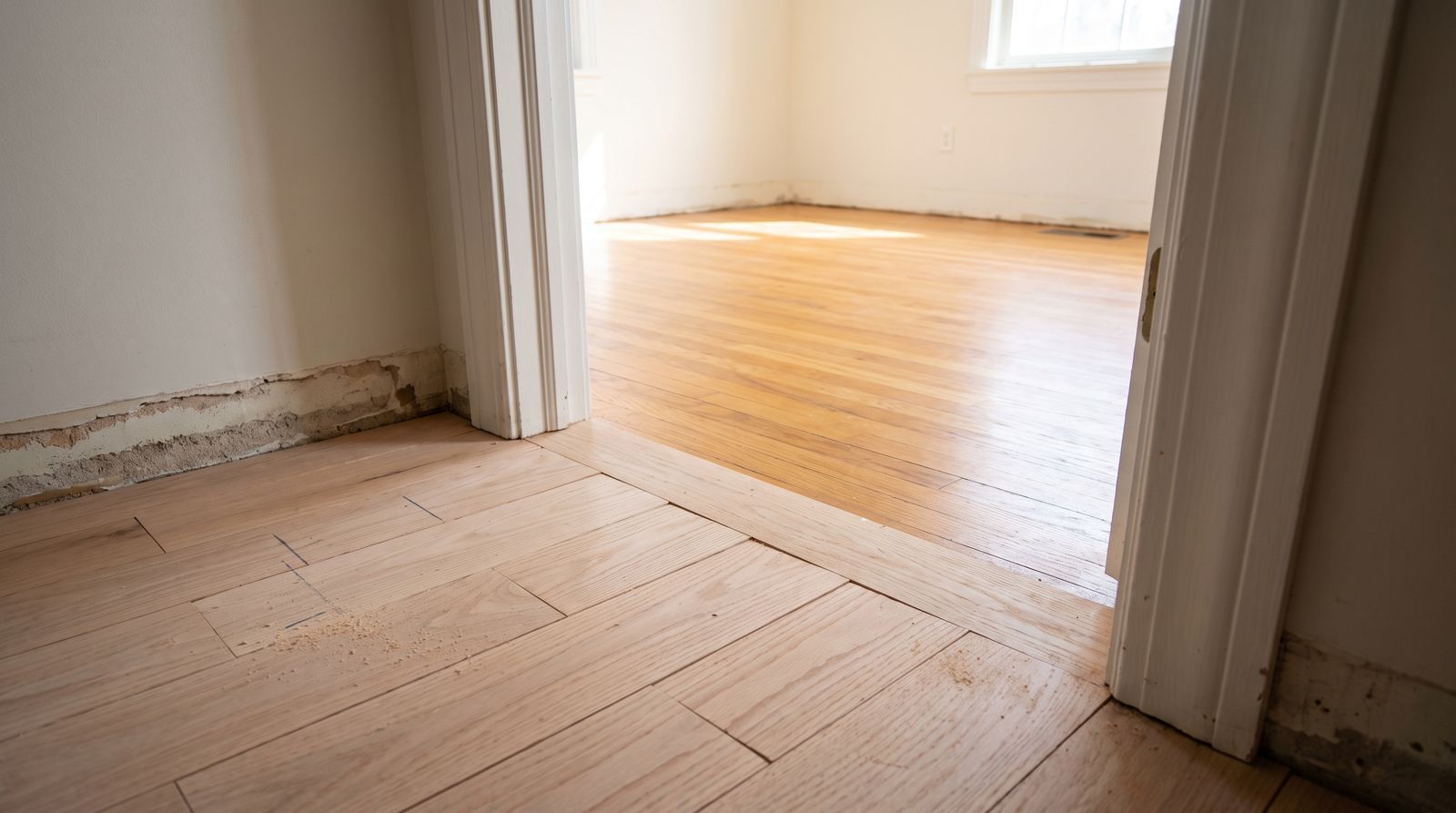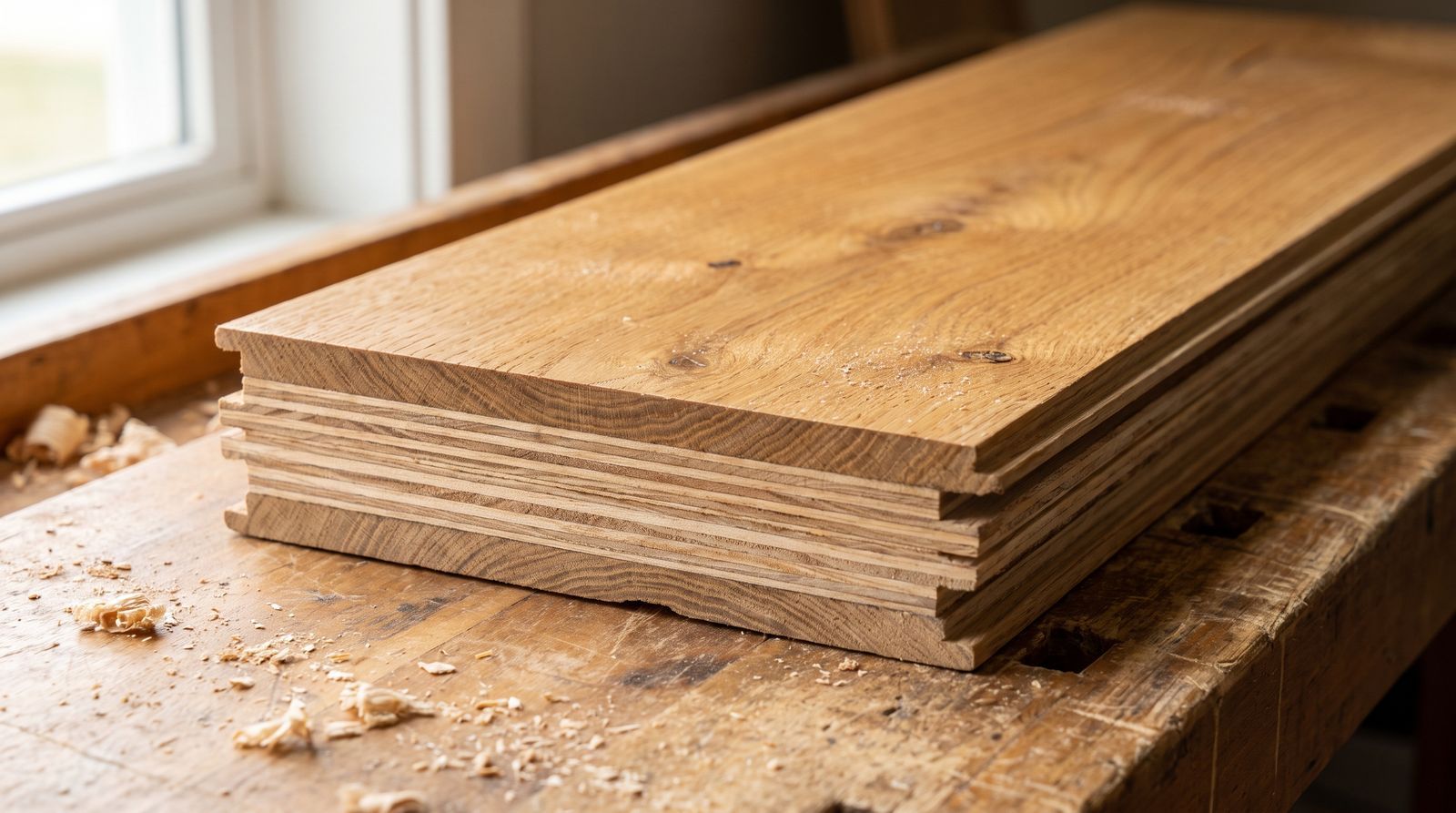


Most of what's floating around as "2026 LVP trends" is color and shape, warm tones, wider planks, that's personal taste, not performance. The one trend actually worth paying attention to is wear layer thickness, since that's the difference between a floor that still looks new in year eight and one that doesn't. Waterproof, meanwhile, isn't really a trend anymore. It's just what LVP is now.
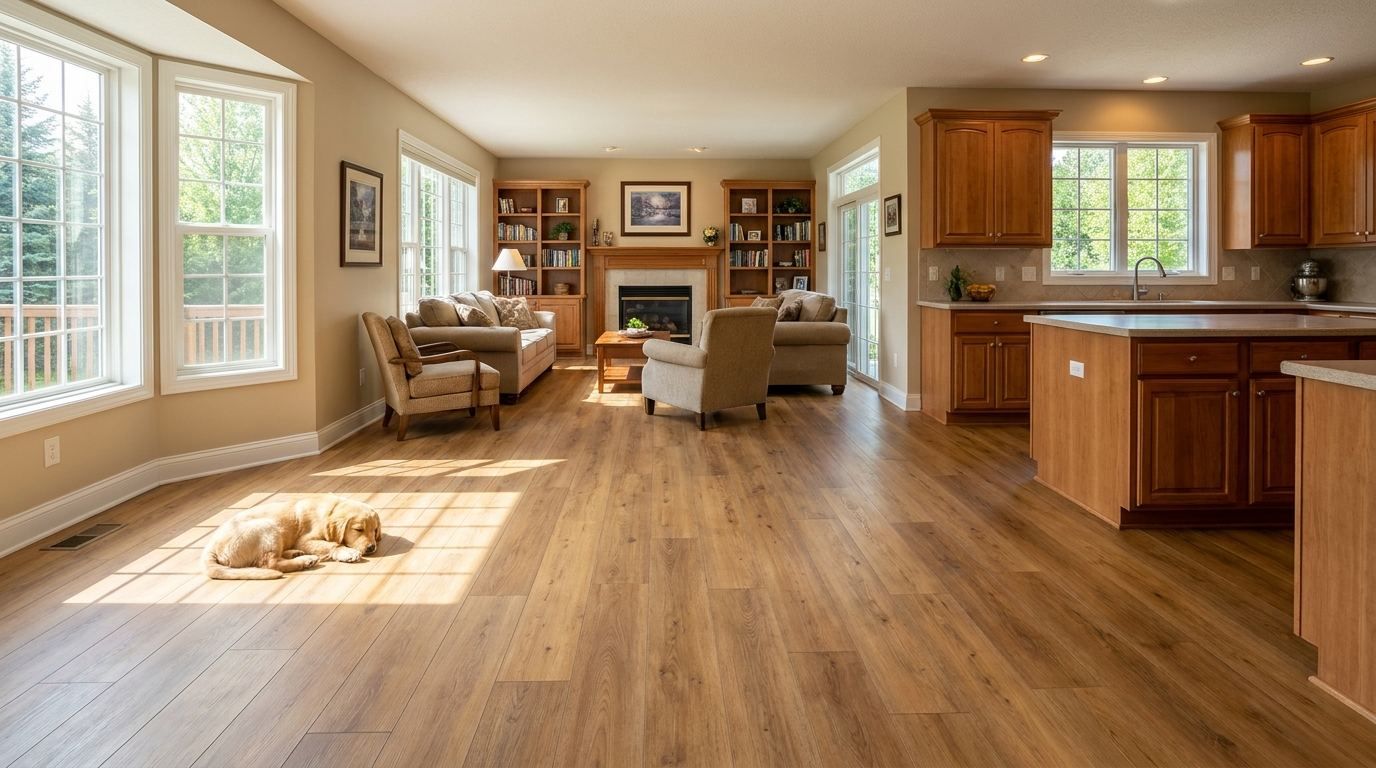
Every flooring site on the internet is running some version of a "2026 trends" post right now, and most of them read identically: matte finishes, warm wood tones, wide planks. All true. None of it tells you which of these actually matters once the floor's been down for five years and a toddler's been running laps through the kitchen. So here's the honest version, trend by trend, plus the one thing genuinely worth paying extra for.
Trend 01Warm Tones Are Replacing Cool Gray
Gray's been the default answer for years now, cool, neutral, safe. That's shifting. Honey, caramel, and warmer light-oak tones are what we're getting asked for most this year, and "greige," that gray-beige middle ground, is edging out straight gray as the new safe choice. It's a real shift. You can see it in every new product line launching this year, not just the trend blogs talking about it.
Does it change how the floor performs? Not even a little. This one's entirely about what you want to look at every morning with your coffee. If cool gray still feels right for your space, there's nothing wrong with it. Floors don't come with an expiration date just because Pinterest moved on.
Style, Not Durability Pick the color you'll still like in year six, not the one trending this spring.
Trend 02Wider, Longer Planks
Planks are getting wider, 7 to 9 inches is common now, up from the narrower strips that were standard a few years back. Fewer seams, a calmer look, rooms read a little bigger. We like installing them.
Here's the part nobody puts in the trend post, probably because it's not exactly Pinterest material: wider planks show subfloor imperfections more, not less. A slight dip or hump that a narrow plank would quietly hide becomes a lot more visible under a wide one. If your subfloor hasn't been checked in a while, that's worth doing before you fall for the 9-inch look.
Style, With a Catch Get your subfloor checked first. Wide planks are less forgiving than they look.
Trend 03Matte, Hyper-Realistic Finishes
High-gloss LVP is on its way out. Matte is what's getting specified now, partly for the look (it reads more like real wood from across the room) and partly because it's more forgiving day to day. Matte genuinely hides footprints, dust, and light scratches better than a shinier finish does. The embossing technology has also gotten good enough that a lot of today's LVP is legitimately hard to clock as vinyl until you're standing on it.
This is a rare case where the trendy choice and the practical choice happen to be the same choice.
Small Real Upgrade Not just style, matte actually shows less daily wear.
Trend 04 · The One That MattersWear Layer Thickness
Here's the trend that actually affects how long your floor holds up, and it's the one every "top trends" list skips, probably because a wear layer spec sheet doesn't make for a great photo.
The wear layer is the clear protective top coat on an LVP plank. It's what actually takes the scratches and dents, not the printed wood-look design underneath. Thicker wear layers cost more but hold up longer. For a busy family home, especially with dogs, we tell people to look for 20 mil or higher. Builder-grade product often comes in around 12 mil, which is perfectly fine for a low-traffic guest room and not fine for a kitchen with two kids and a Labrador.
This is the one spec actually worth spending real time comparing before you buy, more than color, more than plank width.
Actually Worth the Upcharge Compare wear layer thickness before anything else on the spec sheet.
Trend 05Waterproof Is the Baseline Now, Not the Upsell
A few years back, "waterproof LVP" was a premium claim you'd pay extra for. In 2026, it's close to standard. Most LVP built on an SPC (stone-plastic composite) or WPC (wood-plastic composite) core is waterproof by design, not bolted on as a feature.
Which means if a product is charging you a real premium purely for the word "waterproof," that's the marketing part of this list. It's not a special feature anymore so much as a baseline expectation, the same way you wouldn't pay extra for a car that happens to have brakes.
Already Standard Don't pay a premium just for a label that's basically baked in now.
A Few Things People Actually Ask Us
What is a wear layer, and how thick should it be?
It's the clear protective top layer on an LVP plank that resists scratches and dents, not the printed design underneath it. For a busy household, look for 20 mil or higher. 12 mil is fine, but really only for low-traffic rooms.
Can LVP go over radiant floor heating?
Most SPC-core LVP can, but check the surface temperature limit first, most manufacturers cap it around 85°F. Always confirm against the specific product's spec sheet before installing over radiant heat, not just the general category.
Are wider planks harder to install?
Not harder, but less forgiving. Wider planks show an uneven subfloor more than narrow ones do, so subfloor prep matters more with this trend than it used to.
Is warm-toned LVP just a passing trend?
Color trends always cycle eventually, but warm wood tones read more timeless than the cool-gray wave that's fading now, mostly because they're closer to what natural hardwood has always looked like. Choose what you'll be happy looking at, not what's trending this quarter.
Do I need special underlayment for 2026-style LVP?
Usually not beyond whatever the manufacturer specifies for that core type. WPC often comes with attached underlayment already. Confirm with your installer rather than assuming, since it varies by product line.
Picking flooring off a trends list is a fine place to start. Just don't let the list decide the one thing that actually matters. Want a straight read on what's worth it for your specific room? Ask us, we'll tell you honestly, even the parts that aren't on any trend list.