

Every family that calls us asks some version of the same question: what actually holds up around here?
Fair question, and most of what's written online doesn't answer it for Northern Virginia specifically. A lot of flooring advice is written for a dry climate, or a house that isn't dealing with a humid DC-metro summer and an older subfloor. We install all four of the common options families ask about, so we don't have a horse in the race the way a flooring that only sells one product might.
Here's the honest version, no jargon, no pitch.
If you don't know what "engineered hardwood" or "wear layer" means, that's fine, we'll explain everything as we go. You shouldn't need a flooring degree to pick a floor.
If you only read four lines:
- Kids, dogs, or both, and you'd rather not think about your floor? Luxury vinyl plank (LVP).
- Resale value and a timeless look matter most, and you can live with a little more upkeep? Engineered or solid hardwood.
- A bedroom, a low-traffic room, or you want a soft, quiet floor on a budget? Carpet still makes sense.
- Whatever you pick, keep indoor humidity between 35–55% in the summer. Every material on this list reacts to moisture, some just hide it better than others.
Read time: 8 minutes. Decision time: however long it takes you to find the table below.
Why this decision is harder in Northern Virginia than it looks online
Most flooring comparison articles are written in general terms because they're trying to rank for searches everywhere. But a house in Arlington, Fairfax, or Alexandria deals with something a lot of that advice glosses over: real humidity swings.
The EPA recommends keeping indoor relative humidity below 60%, ideally between 30 and 50%, to prevent mold and moisture problems in a home. That's good general health advice. For flooring, it matters even more, because every material on this page expands, contracts, or reacts to moisture differently, and a NoVA summer will test all of them.
Solid hardwood is the most sensitive to this. Engineered hardwood is more stable. LVP and carpet don't swell or cup, but LVP can still trap moisture underneath if it's installed over a damp subfloor, and carpet can hold moisture (and odor) longer than any of them. None of that means "don't get hardwood" or "always get vinyl." It means the right choice depends on the room, the household, and how much maintenance you actually want to do.
The four contenders, plain English
Here's what each one actually is, since half the confusion in this decision is just not knowing what the terms mean.
Luxury vinyl plank (LVP)
A multi-layer synthetic plank, usually with a printed wood-look design layer and a clear protective "wear layer" on top, that's built to resist water, scratches, and dents. It's not the vinyl flooring from a 1970s kitchen. Good LVP looks and feels close to real wood underfoot, and it's completely waterproof, not just water-resistant.
Engineered hardwood
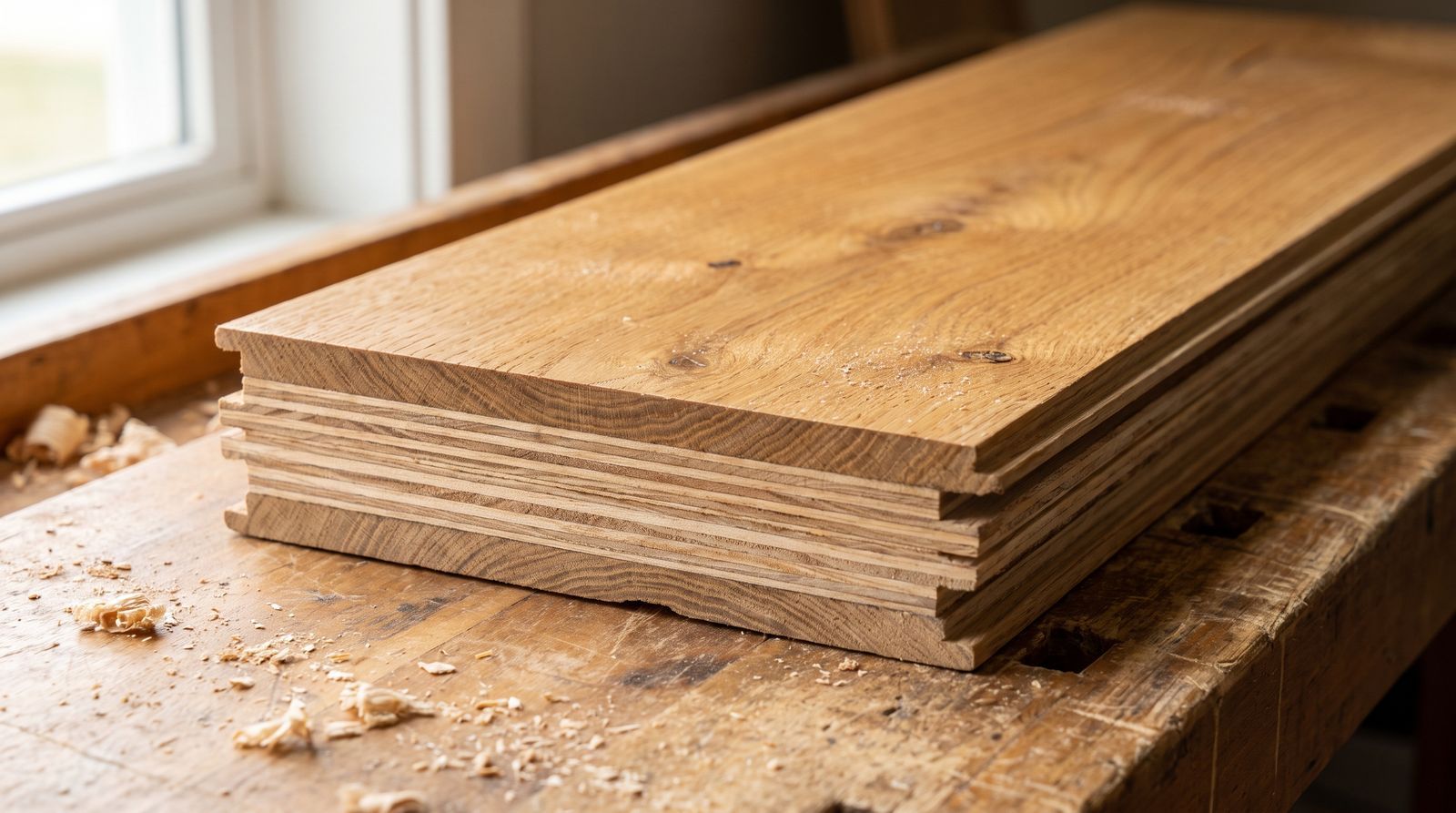
Real wood on top (a thin veneer, usually 1/16" to 1/4" thick) bonded to layers of plywood underneath, running cross-grain for stability. It looks and can be refinished like solid hardwood, but the layered construction makes it handle humidity swings better than solid wood.
Solid hardwood
One solid piece of wood, top to bottom. This is the "gold standard" for a reason: it can be sanded and refinished many times over its life, sometimes for 100 years or more, and it's the option buyers expect in a higher-end NoVA home. It's also the most reactive to humidity of anything on this list.
Carpet
Still the most affordable option, and still the best at dampening sound and feeling soft underfoot. It's the weakest choice for spills, allergens, and pet accidents, but for a quiet bedroom on a budget, it's not going anywhere.

Head-to-head: durability, cost, and lifespan
General ranges for the DC metro area. Your actual quote depends on the room, the subfloor condition, and the product tier.
| Feature | LVP | Engineered Hardwood | Solid Hardwood | Carpet |
|---|---|---|---|---|
| Water resistance | Fully waterproof | Water-resistant, not waterproof | Damaged by standing water | Absorbs and holds moisture |
| Scratch/dent resistance | Very high | Moderate to high | Moderate | N/A (shows wear differently) |
| Typical installed cost | $4–$9 per sq. ft. | $8–$14 per sq. ft. | $10–$18 per sq. ft. | $3–$7 per sq. ft. |
| Lifespan | 15–25 years | 20–30 years | 50–100+ years | 5–15 years |
| Maintenance | Sweep, damp mop | Damp mop, occasional recoat | Damp mop, periodic refinish | Regular vacuum, deep clean |
| Resale appeal | Good, improving | Very good | Best | Neutral to negative |
Which one wins for your household
The honest answer is "it depends on the room," so here's how we actually talk families through it.
For Kids and DogsLVP, almost every time
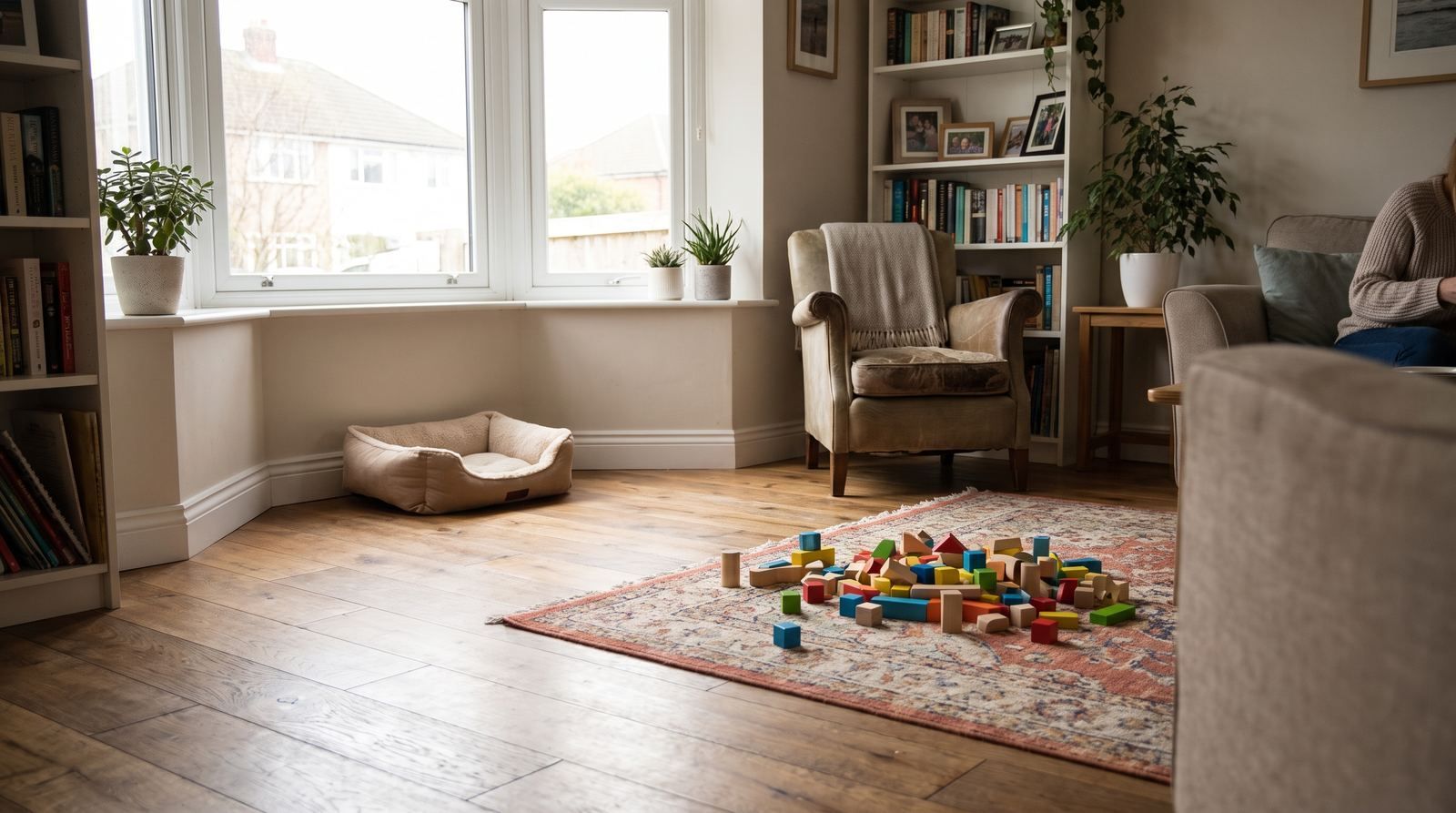
If you have large dogs, young kids, or both, LVP is the floor that lets you stop worrying. It shrugs off water bowls, muddy paws, and the occasional dropped juice box in a way solid hardwood simply can't. We've watched families switch a busy kitchen or mudroom to LVP and never look back.

Engineered or solid hardwood
If you're planning to sell in the next several years, or you're in a neighborhood where buyers expect hardwood, it's still the safer investment. It's one of the few flooring upgrades that reliably shows up in appraisals and buyer walkthroughs.
For Bedrooms and Tight BudgetsCarpet still has a place
Low-traffic rooms, especially bedrooms, are where carpet's downsides matter least and its upsides (quiet, soft, cheap) matter most. We don't try to talk every family out of it.
For Basements and Rental UnitsLVP again, for a different reason
Basements run more humid than the rest of the house, and rental turnovers need a floor that survives multiple tenants without constant refinishing. LVP handles both. It's also why it's the material we install most often for landlords, it's forgiving, it's fast to install, and it doesn't need babying between tenants.

What we actually install most in family homes across NoVA
Honestly, it's LVP, by a wide margin, in kitchens, mudrooms, basements, and family rooms. Not because it's the fanciest option (it isn't) or the one with the best margins for us (there isn't much difference), but because it's the one families call us back about the least. That's the actual test we use internally: which floor generates the fewest "can you come take a look at this" calls a year later.
Hardwood still wins in formal living rooms, dining rooms, and homes where resale is the priority. We're not trying to talk anyone out of hardwood, we install plenty of it, and we love how it looks. We just think families deserve a straight answer about which rooms it's actually suited for.
The one mistake we see families make
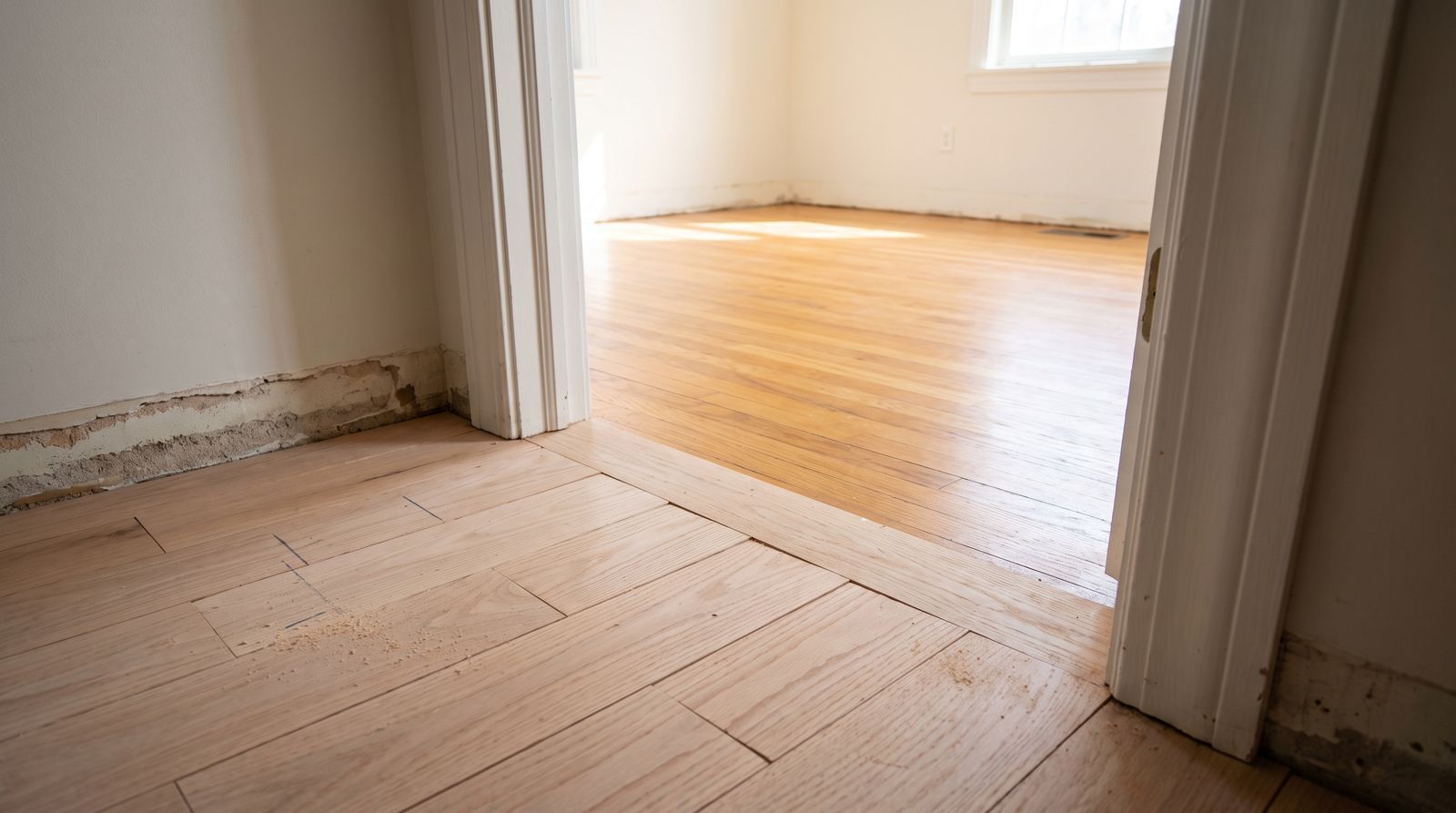
Installing solid hardwood in a space with an existing moisture problem, most often a walkout basement or a room over a crawl space, without fixing the moisture source first. The floor looks great for a year or two, then starts cupping (the edges of each board rise slightly higher than the center) the first humid summer.
If that's already happened to you, it's usually fixable. Read our guide to protecting hardwood through a NoVA summer for the habits that prevent it, and if it's already cupped, a professional refinish is almost always cheaper than replacement once the moisture source is addressed.
Before You Choose Your Flooring
Five minutes with a tape measure and a straight answer to each of these saves a lot of regret later.
- Which room is this for, and how much foot traffic (and paw traffic) does it actually get?
- Is there any history of moisture, flooding, or a damp smell in this space?
- Are you planning to sell in the next 5 years, or is this a forever home?
- What's your realistic tolerance for maintenance: none, occasional, or "I don't mind"?
- Is this a rental unit that needs to survive multiple tenants?
Frequently Asked Questions
How much does LVP cost installed in Northern Virginia?
Typically $4 to $9 per square foot installed, depending on the product tier and subfloor prep needed. It's usually the most budget-friendly option that still looks like real wood.
Is LVP actually waterproof, or just water-resistant?
Good-quality LVP is genuinely waterproof, the core layer doesn't absorb water the way wood does. That's different from a water-resistant finish on hardwood, which only slows moisture down rather than blocking it entirely.
Can I put solid hardwood in a kitchen or basement?
You can, but we usually steer families toward engineered hardwood or LVP for those specific rooms. Kitchens see more spills than anywhere else in the house, and basements run more humid, both are tougher environments for solid wood.
How long does engineered hardwood last compared to solid hardwood?
Engineered hardwood typically lasts 20 to 30 years and can usually be refinished once or twice, depending on how thick the top wood layer is. Solid hardwood can last 50 to 100+ years and be refinished many more times over its life. Solid wins on raw longevity; engineered wins on humidity stability.
What's the best flooring for a rental property?
LVP, for most units. It survives multiple tenants, resists the wear and tear that turns over a security deposit, and installs fast between leases. We install it for landlords across Northern Virginia, Maryland, and DC for exactly these reasons.
Does carpet still make sense anywhere in a family home?
Yes, bedrooms especially. It's quiet, soft, inexpensive, and the downsides that matter in a kitchen or living room (spills, allergens, wear) matter a lot less in a low-traffic room.
One short email a month. No fluff, no sales.
Practical flooring advice from the people who actually do the work, written for Northern Virginia homeowners. One piece, one tip, the first Saturday of every month.
Sign Up FreeNot sure which floor is right for your home?
Tell us about the room, the household, and the budget. We'll give you a straight answer, even if it's not the most expensive option.