

The Fourth is this weekend, and the ten days on either side of it are when most hardwood floor damage happens all year.
Not from anything dramatic. Nobody drops a grill on the dining room floor. It's smaller than that: a spilled juice box wiped up with the nearest paper towel, a proud relative breaking out the Murphy's Oil Soap because that's what the label says to use, a well-meaning teenager going over the whole downstairs with a steam mop before guests arrive.
Every one of those is someone trying to do the right thing. Done wrong, every one of them costs you a little bit of finish.
It only goes wrong when the response to a spill is the wrong cleaner or too much water, and both of those are avoidable if the right stuff is already in the house before the first guest shows up.
Here's the cheat sheet we'd hand a neighbor. It's the same one we send out in our monthly newsletter, From The Workshop, nothing fancy, just what actually works.
Four things to keep straight:
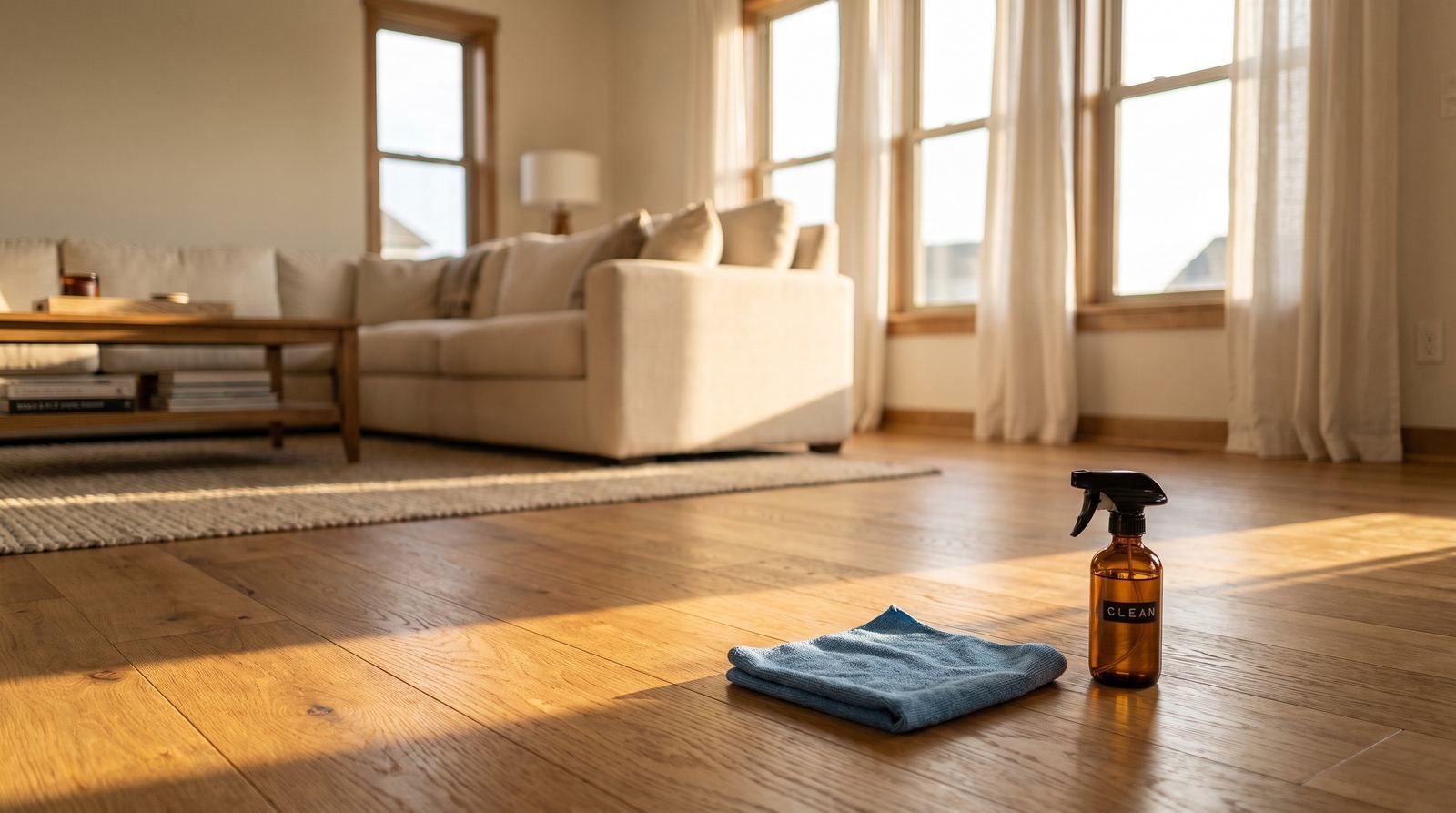
- Keep microfiber cloths, a water spray bottle, dish soap, and a dust mop under the sink.
- Mop damp, never wet. Microfiber, never string. Go with the grain.
- Never use Murphy's Oil Soap, vinegar, ammonia, bleach, or a steam mop on hardwood.
- When in doubt: one drop of dish soap in a cup of water, on a damp microfiber cloth.
Total cost: under twenty dollars. Total time: ten minutes to put the kit together. That's what stands between a normal cookout and a refinish next spring.
Why the ten days around a cookout are so hard on a floor
Think about what's different this week versus a normal Tuesday. More foot traffic. More kids running through in wet swimsuits. More drinks getting set down on end tables and knocked over. More relatives who've heard that Murphy's Oil Soap is "what you use on wood floors" and are actively reaching for it in your kitchen cabinet right now.
None of that has to end badly. It only goes wrong when nobody thought about the spill kit until after the spill.
The spill kit: five things, under twenty bucks
Keep these in a basket under the kitchen sink. When a kid spills a popsicle mid-party, you want to grab a basket, not run to the store.
- A stack of microfiber cloths. Not paper towels. Paper towels feel absorbent, but they grind whatever grit is on the floor straight into the finish while you wipe. Microfiber traps it instead.
- A spray bottle of plain water. For most spills, this is genuinely all you need.
- Plain dish soap. One drop in a cup of water is your everyday hardwood cleaner. You don't need a specialty product for day-to-day messes.
- White vinegar, for tile and stone only. Keep it in the kit for the kitchen backsplash or the bathroom floor. It does not belong anywhere near your hardwood, and we'll get to why below.
- A microfiber dust mop. For the dry sweep before you ever add water. Most of what dulls a floor's shine over time is ground-in grit, not stains.

The right way to mop a hardwood floor
Most of the damage we see in NoVA homes doesn't come from a bad cleaner. It comes from too much water. Three rules cover almost every situation:
Rule OneDamp, never wet.
If you can look down and see water sitting on the surface for more than five seconds, you've already used too much. Hardwood and standing water are not on speaking terms. Water finds the seams between boards and works its way down into the wood, and that's how you get cupping.
Rule TwoMicrofiber, never string.
A string mop can hold ten times the water a hardwood floor can safely handle. It feels like a deeper clean. It's actually just more moisture sitting where it shouldn't be.
Rule ThreeFollow the grain.
Mop with the direction of the boards, not across them. It looks identical while it's wet. It looks very different once it dries: streaks and lines love to show up right where you went against the grain.

What not to use, even if it's what you grew up with
This is the part where we lose a few people, because every item on this list has a longtime fan somewhere in the family. Here's why each one still needs to go.
Murphy's Oil Soap on hardwood
Yes, even though the bottle says "wood." Murphy's builds a waxy film with repeated use, and that film is invisible right up until the day you want your floors professionally refinished. Wax residue keeps a new finish from bonding properly, which means more prep work, more cost, and sometimes a redo. We've opened up floors that looked fine and found years of buildup underneath.
Vinegar on hardwood
It's acidic, and acid slowly eats away at polyurethane finish with every use. One mopping won't hurt anything. Doing it every week for three years will leave you with a dull, etched-looking floor and no single incident to point to as the cause.
Ammonia or bleach on any wood floor
Both strip and discolor a finish over repeated use, and neither belongs anywhere near your floors.
If you ever reach for both in the same cleaning session, don't. Mixing ammonia and bleach produces chloramine vapors, and the CDC's own safety guidance is blunt about it: never mix bleach with ammonia or any other cleaner. Keep them in separate cabinets entirely.
Steam mops on wood or laminate
They look like the deep-clean option, but steam pushes moisture directly into the seams between boards, exactly where you don't want it. It's the fastest way to turn a five-minute cleanup into a six-month cupping problem.

When in doubt, go back to the spill kit: water and a drop of dish soap, on a damp microfiber cloth. That's it. That's genuinely what our own families use at home.
Cookout spills, decoded
A few specific ones come up every year around this time. None of these need anything beyond what's already in your spill kit.

| Spill | What to do |
|---|---|
| Popsicle or juice | Blot immediately with a dry microfiber cloth, then go over the spot with a barely damp cloth. Sugar left to dry gets sticky and starts attracting dirt. |
| BBQ sauce or ketchup | Same as above: blot first so you're not smearing it, then damp cloth with a drop of dish soap. |
| Red wine | Blot, don't rub. A rubbed-in wine spill spreads the stain; a blotted one usually lifts clean if you catch it within a few minutes. |
| Candle wax | Let it harden completely, then gently scrape with a plastic scraper (an old gift card works). Never scrape with metal, that's how you get a scratch instead of a wax problem. |
If a spill sits long enough to actually stain the wood rather than just sit on top of the finish, that's usually a job for a professional recoat, not a deeper scrub. Scrubbing harder on a set-in stain tends to dull the finish around it, which just trades one problem for a bigger one.
The Cookout Weekend Floor-Care Checklist
Print this. Stick it on the fridge. Ten minutes, tops.
- Stock the spill kit: microfiber cloths, water spray bottle, dish soap, dust mop
- Brief whoever's hosting on "damp, never wet"
- Move the Murphy's Oil Soap, vinegar, ammonia, and bleach out of easy reach
- Keep the steam mop in the closet this weekend
- Blot spills right away; never rub or scrub
- Watch for dull patches or bare wood after the party, and call us if you see either
When cleaning isn't enough anymore
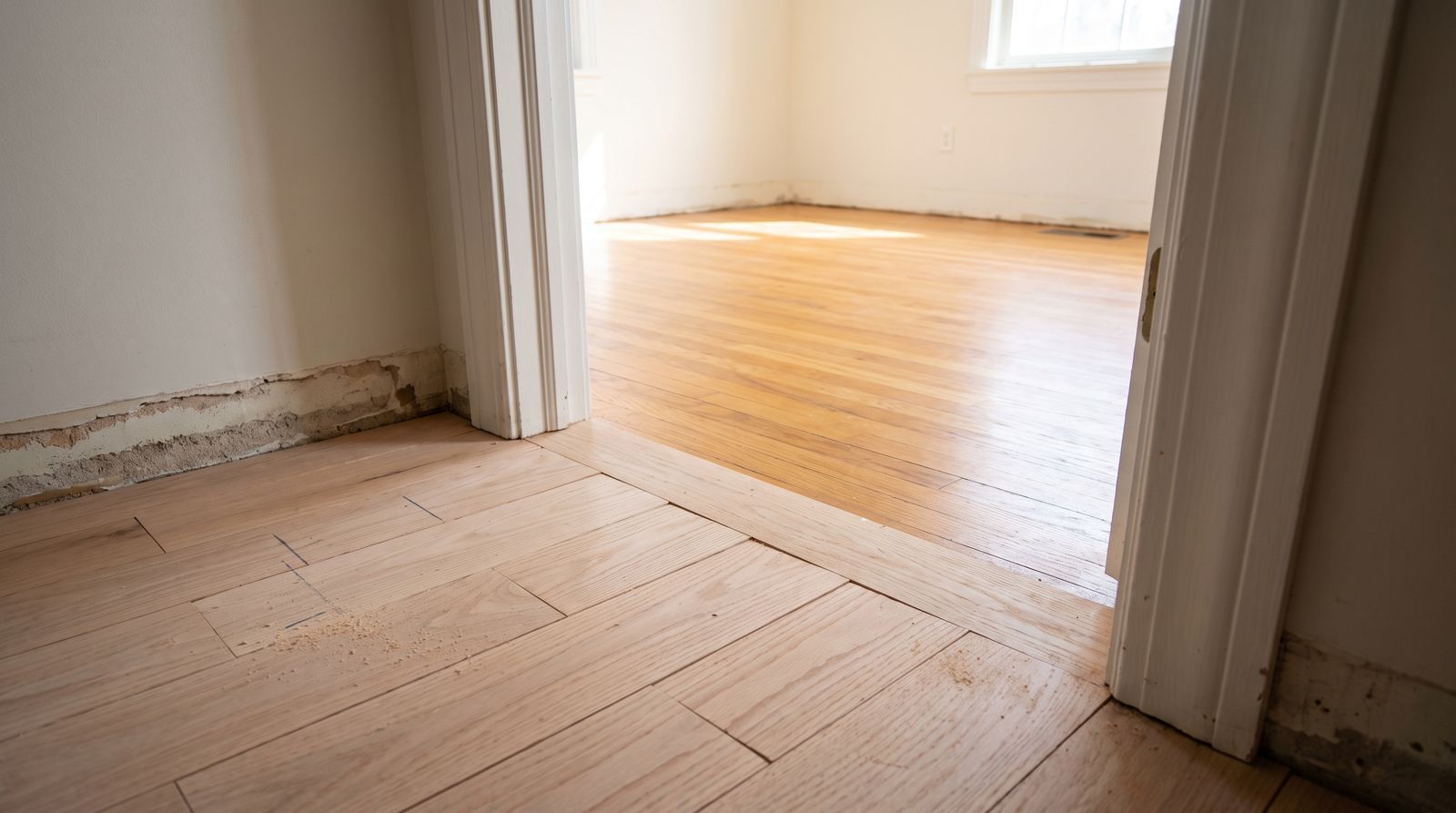
Good cleaning habits protect a finish. They don't restore one that's already worn through. If you're noticing any of the following, it's worth having someone take a look before your next big gathering:
- A dull, cloudy patch that doesn't come back after cleaning.
- Bare wood showing through in high-traffic areas, like in front of the sink or by the back door.
- A rough or "grabby" feel underfoot in one spot.
- Water rings or white marks that don't lift with a damp cloth.
Any of those usually point to a finish that's worn past what surface cleaning can fix. At that point, a professional recoat is a lot cheaper than waiting for it to turn into a full hardwood refinish. If you're not sure which one you're looking at, we're happy to take a look. No pressure, no sales pitch attached.
Frequently Asked Questions
What's the best homemade hardwood floor cleaner?
One drop of plain dish soap in a cup of water, applied with a damp (not wet) microfiber cloth or mop. It's mild enough for daily use and won't build up residue the way specialty "wood cleaners" sometimes do.
Is a Swiffer WetJet safe for hardwood?
Used sparingly and on a light setting, yes, but the same "damp, not wet" rule applies. If you see standing liquid on the floor after a pass, you're using more than the floor can handle.
How often should I mop a hardwood floor?
Dry dust-mop weekly to clear grit before it scratches the finish. A damp mop with mild soap and water once every week or two is plenty for most households. More than that and you're mostly just adding unnecessary moisture.
Can I use a steam mop on engineered hardwood?
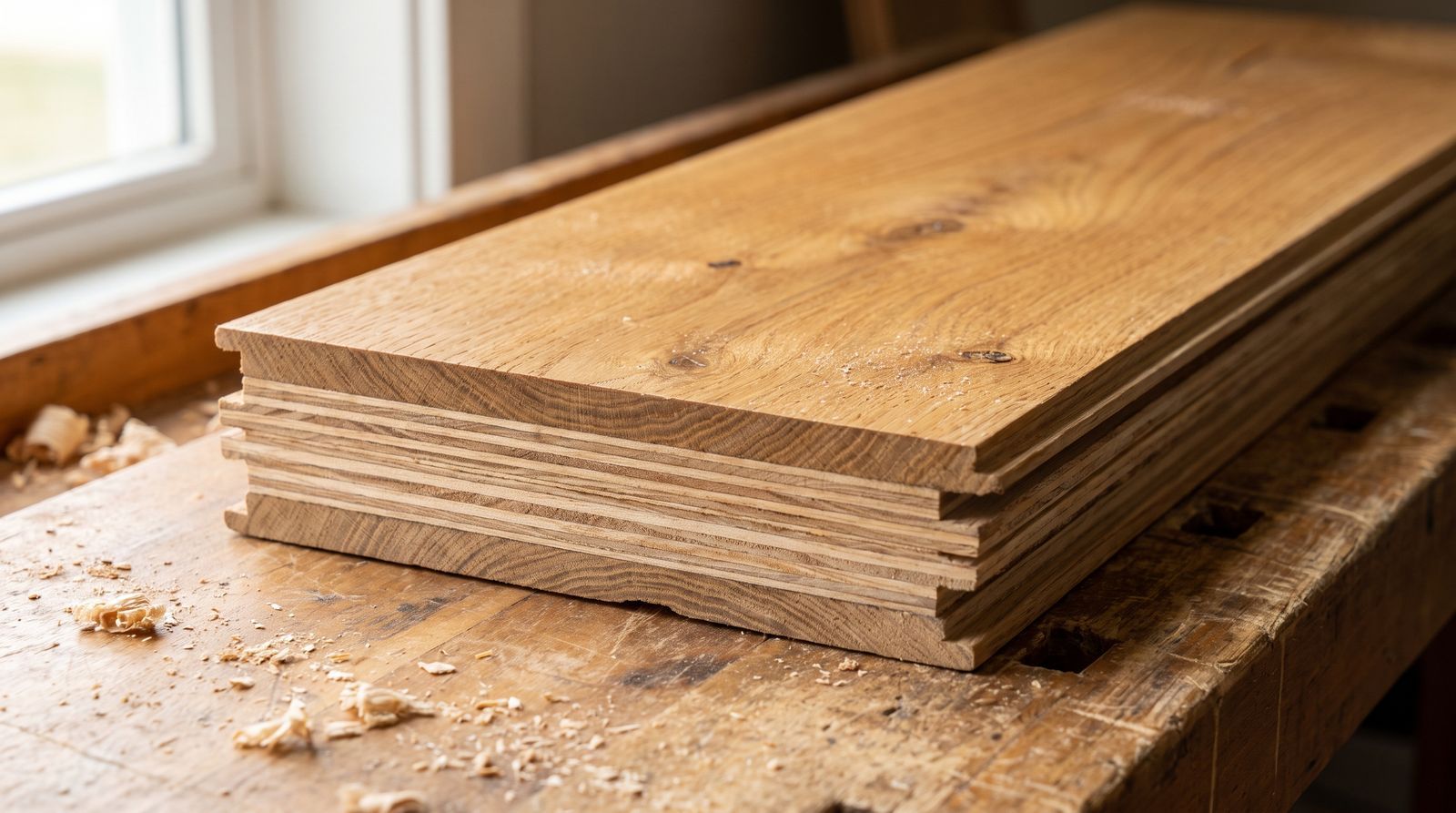
No. Engineered hardwood has a real wood veneer over a plywood core, and steam pushes moisture into the seams just as easily as it does on solid hardwood. Skip it on both.
Is it too late to protect my floors before a party this weekend?
Not at all. Build the spill kit today, brief whoever's helping host on the "damp, not wet" rule, and you're covered. Most of the damage we see happens because nobody thought about it until after the spill.
One short email a month. No fluff, no sales.
Practical hardwood advice from the people who actually do the work, written for Northern Virginia homeowners. One piece, one tip, the first Saturday of every month.
Sign Up FreeHave a question about your floors?
We read every email and every voicemail. Got a stain that's giving you trouble right now? Reply with a photo and what you've already tried, and we'll get back to you before the weekend.